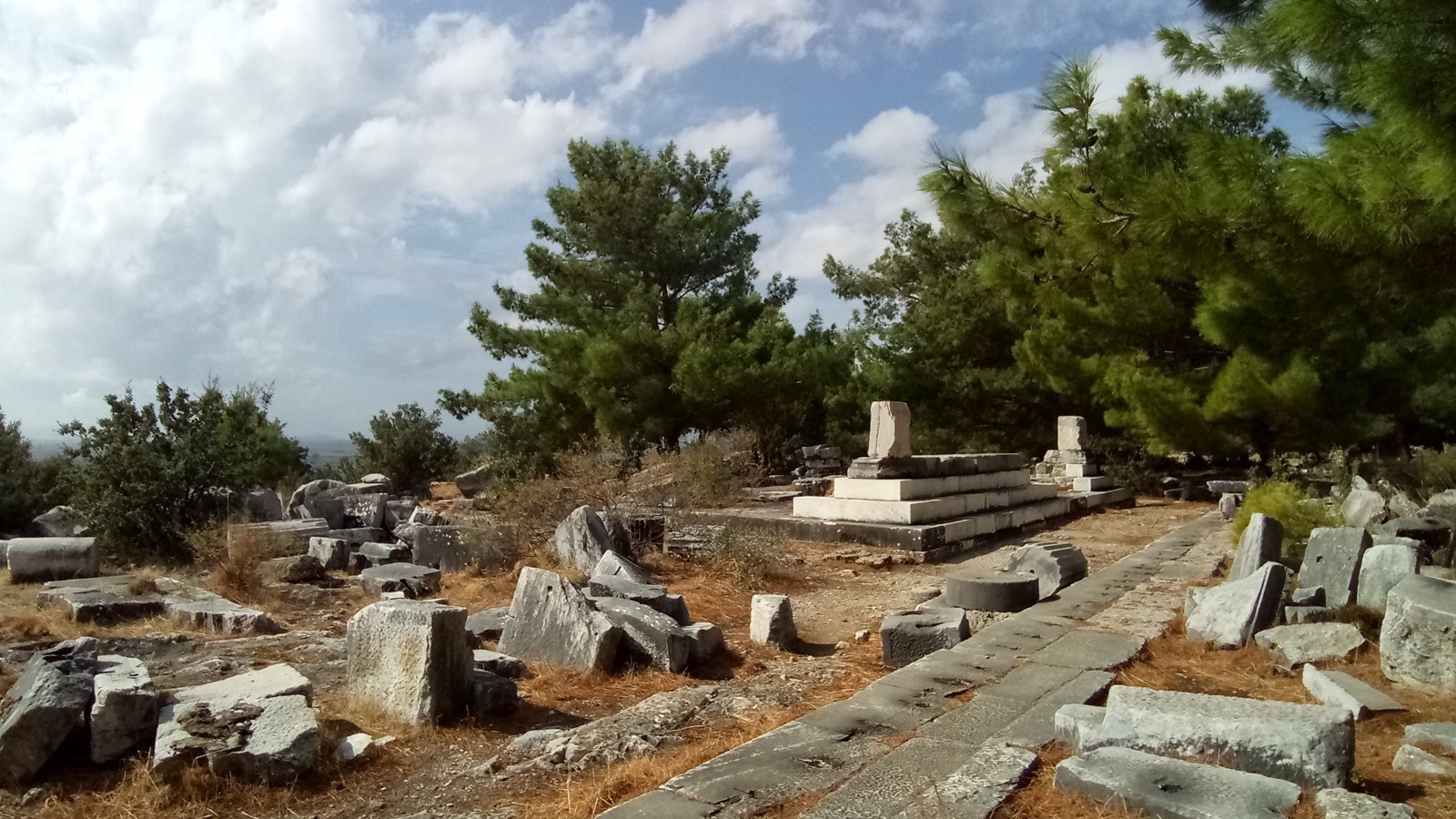
About Priene
On Mount Mycale's slope, Priene offers a particularly readable Hellenistic town plan, with a grid adapted to the terrain, balanced public spaces and surviving houses. The Temple of Athena Polias overlooks the Maeander Plain; theatre, council house and agora reflect a modest but carefully organised city.
History
The earlier settlement's location remains uncertain. The present city was systematically laid out in the mid-fourth century BCE. A dedication naming Alexander illuminates construction of the Temple of Athena Polias. Priene sought to retain political autonomy among powerful neighbours in Hellenistic times and became a classic example in studies of grid planning. Roman additions never turned it into a metropolis. Maeander sediment hindered access to the sea. It became a Byzantine bishopric before abandonment.
Highlights and principal structures
- Temple of Athena Polias
- Theatre
- Bouleuterion
- Agora
- Residential blocks
- Sanctuary of Demeter
- Byzantine church
Historical period
Hellenistic–Roman