About Alabanda
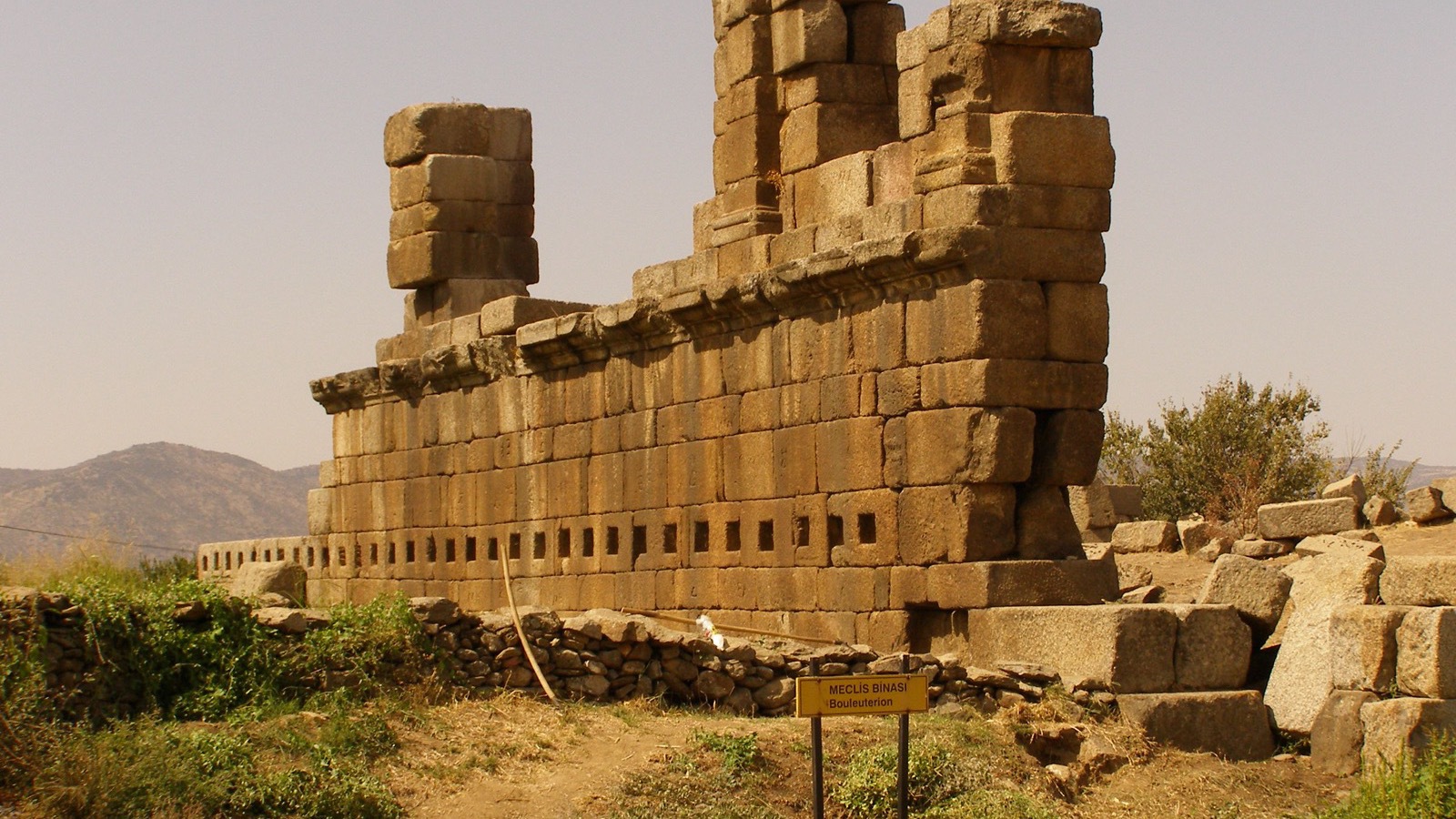
Alabanda occupies a broad area on the Çine Plain, on routes linking inland Caria with the Maeander valley. Its theatres, council house, temples and walls reflect its role in Hellenistic and Roman administration and trade. The city plan gradually emerges among fields and scattered ruins.
History
Alabanda's name is associated with local Carian tradition, and the city becomes prominent in historical records from the fourth century BCE. Under Seleucid rule it was also called Antiocheia Chrysaoreon, before reverting to its earlier name. It belonged to the Chrysaorian League of Carian cities in the Hellenistic period. As a Roman conventus centre, it acquired judicial and administrative importance; ancient writers also described its wealthy way of life. A bishopric in Byzantine times, the settlement later contracted as earthquakes and changing transport networks affected the region.
Highlights and principal structures
- Bouleuterion
- Large theatre
- Small theatre
- Temple of Apollo Isotimos
- Agora
- City walls and towers
Historical period
Hellenistic–Roman