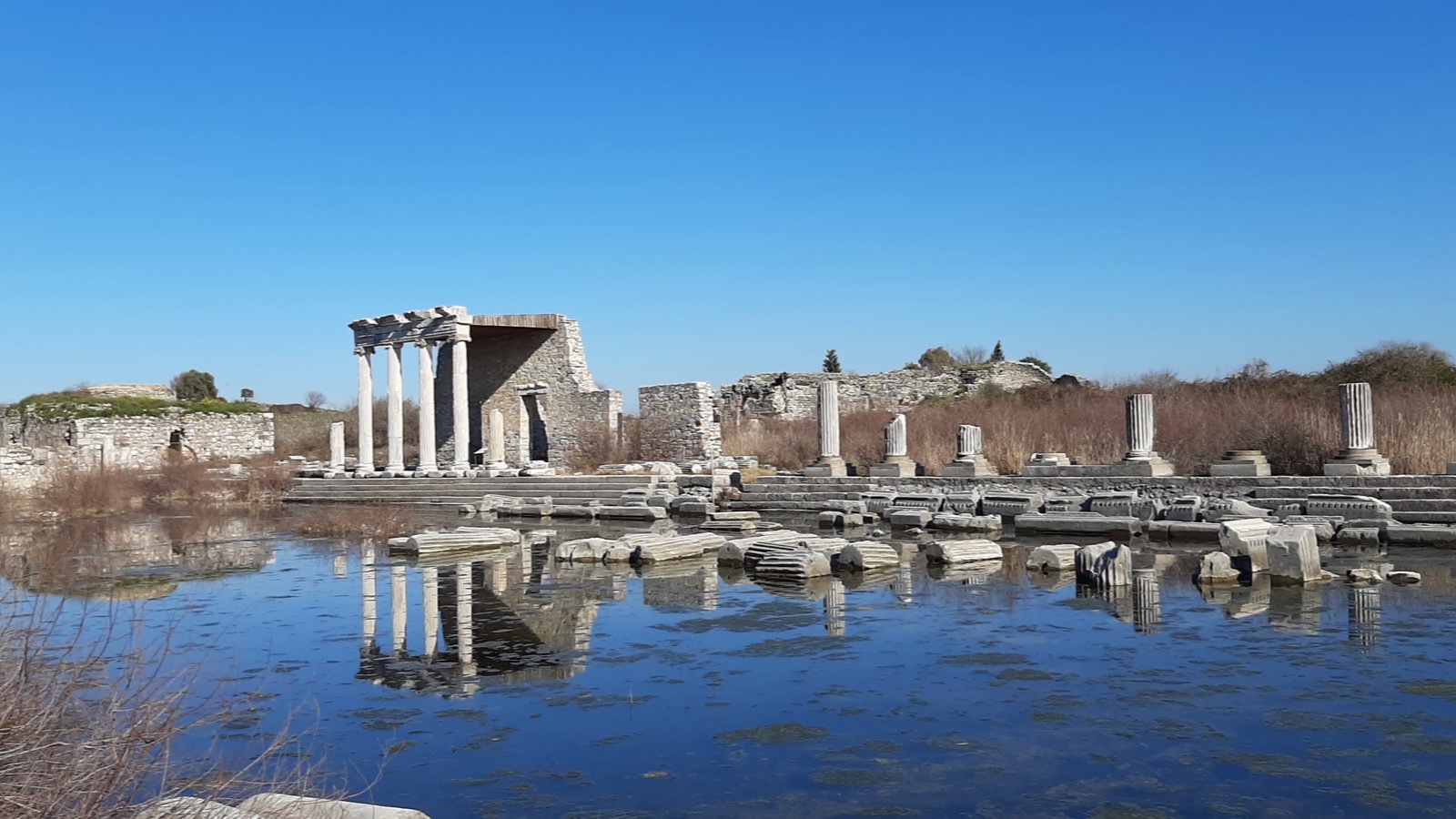
About Milet
Now inland because of Maeander sediment, Miletus was once a powerful maritime city with four harbours and a centre of Ionian thought. Its Great Theatre, Baths of Faustina and agoras preserve Roman monumentality, while harbour monuments and sanctuaries recall trade, seafaring and intellectual life.
History
The area was settled from the Bronze Age. In the eighth to sixth centuries BCE, Milesian colonies created a remarkable Mediterranean and Black Sea trade network. Thales, Anaximander and Anaximenes are associated with its tradition of rational inquiry into nature. Rebuilt after Persian destruction in 494 BCE, it became known for grid planning associated with Hippodamus. Hellenistic and Roman development added theatres, baths and agoras. Harbour silting reduced its economic importance, while a fortified settlement around the theatre continued in Byzantine and Turkish times.
Highlights and principal structures
- Great Theatre
- Baths of Faustina
- North and South Agoras
- Delphinion
- Harbour monument
- Serapeion
- Byzantine–Turkish fortress
Historical period
Archaic–Hellenistic–Roman