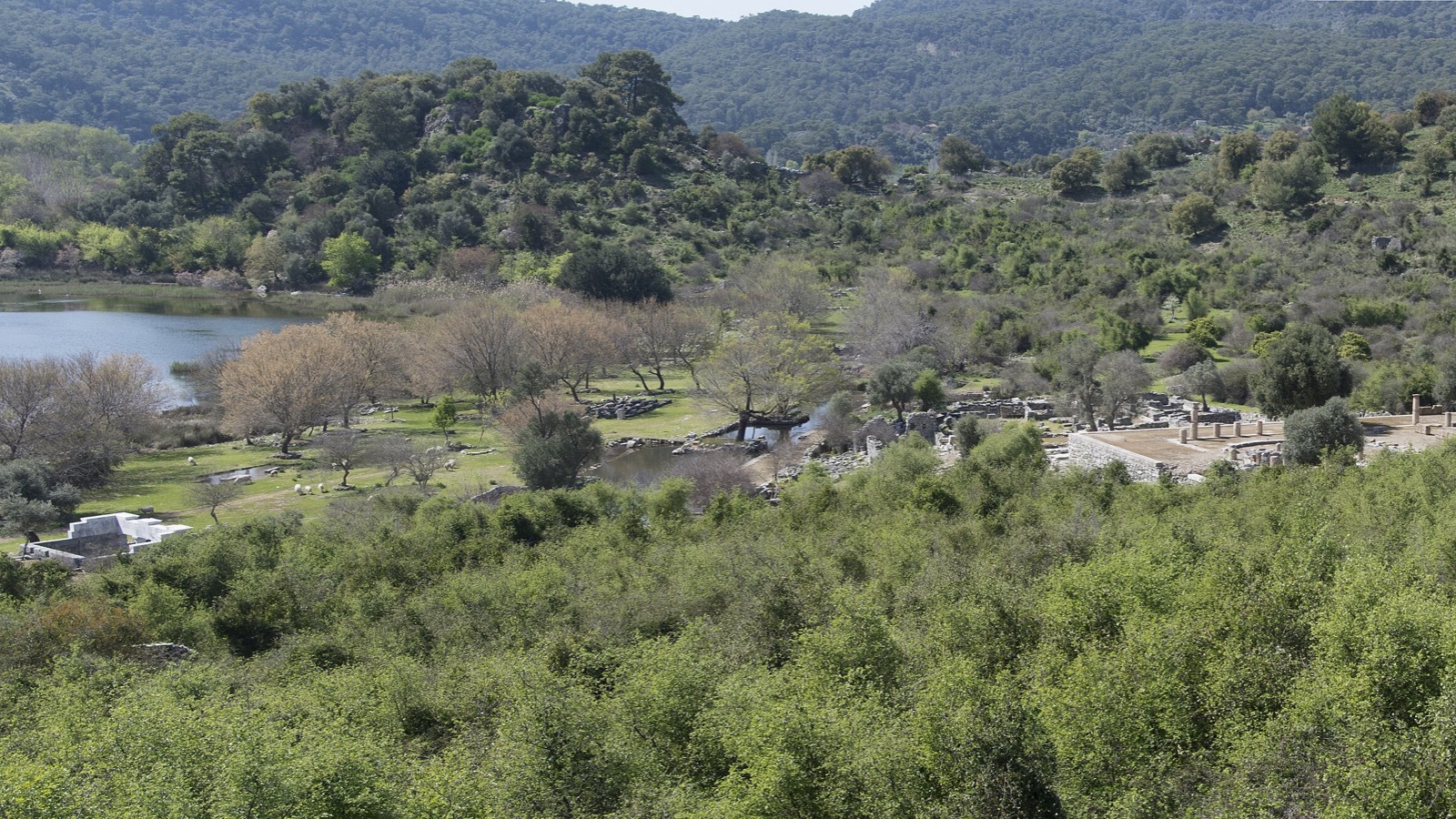
About Kaunos
Beside the Dalyan channel, Kaunos was a port with a distinctive culture between Caria and Lycia. Its theatre, Roman bath, agora and sanctuaries below the acropolis form a remarkable landscape with the rock-cut tombs on the opposite slope. The harbour's transformation into an inland reed-fringed lake illustrates environmental change.
History
Its local identity and language distinguish Kaunos within the first-millennium BCE world of Caria and Lycia. It remained a strategic port under Persian and Hellenistic rule and spent time under Rhodian control. Roman development added a theatre, baths, fountains and monumental harbour buildings. As the Dalyan delta advanced, the port lost contact with the sea; health problems including malaria complicated life. Kaunos continued as a Byzantine bishopric, with the acropolis and nearby defences used in medieval times.
Highlights and principal structures
- Temple-façade rock tombs
- Theatre
- Roman bath
- Agora and nymphaeum
- Measuring platform
- Harbour agora
- Acropolis
Historical period
Classical–Hellenistic–Roman–Byzantine