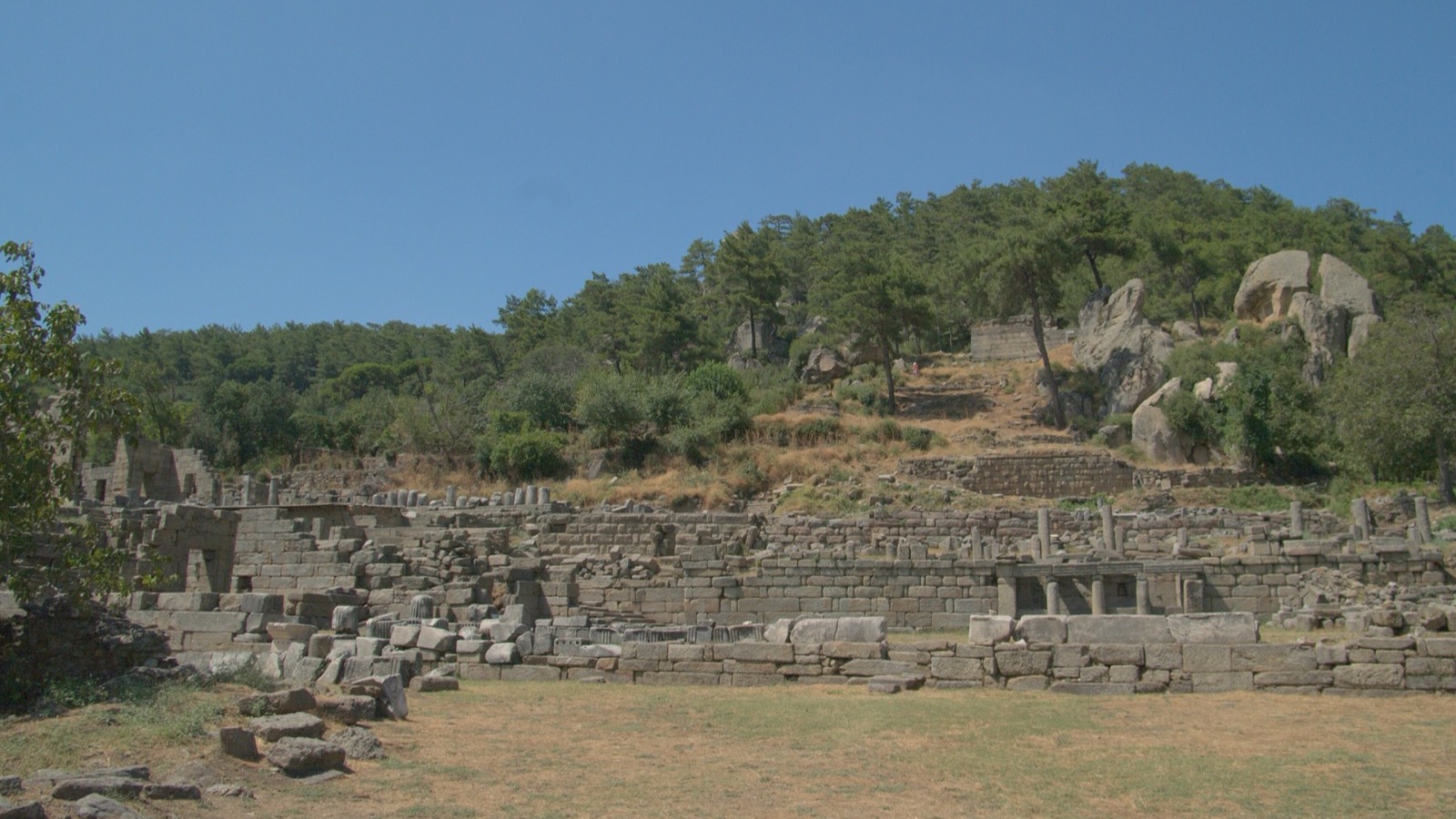
About Labraunda
In the mountains north of Milas, Labraunda was dedicated to Zeus Labraundos. Banqueting halls called andrones, terraces, gateways and the temple show how the Hecatomnid dynasty used religious architecture for political representation. A paved sacred road connected it with Mylasa.
History
Cult activity is traceable to the Archaic period. The sanctuary's greatest transformation took place under Mausolus and his brother Idrieus between 377 and 344 BCE. New terraces, dining halls and monumental entrances were fitted among natural rocks, and the Temple of Zeus was remodelled. Use continued under Hellenistic and Roman rule, with fountains and baths added in imperial times. Some buildings acquired new functions in late antiquity. Long-running research examines architecture, water management, inscriptions and sacred landscape.
Highlights and principal structures
- Temple of Zeus Labraundos
- Andron A and B
- South and East Propylaea
- Terrace buildings
- Monumental tomb
- Mylasa–Labraunda Sacred Way
Historical period
Archaic–Hellenistic–Roman