About Knidos
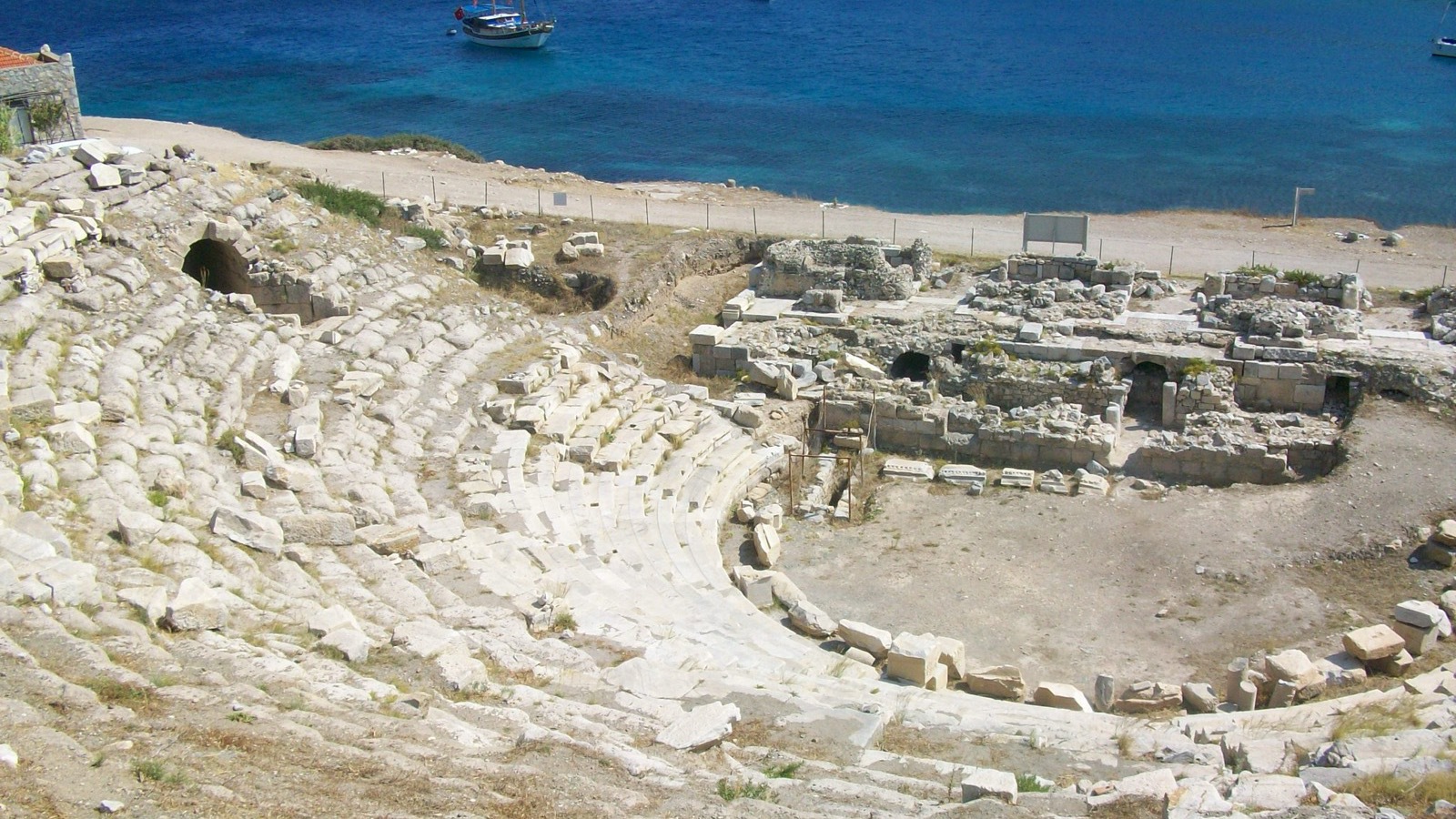
At the tip of the Datça Peninsula, Knidos was a Doric city arranged around two harbours between the Aegean and Mediterranean. Theatres, terraced sanctuaries and a sundial evoke a centre of astronomy, medicine, art and trade. It is also associated with Praxiteles's celebrated Aphrodite.
History
The earlier settlement is generally placed near Datça, with relocation to today's Cape Tekir around the fourth century BCE. Knidos belonged to the league of six Doric cities and was associated with its games. Two sheltered harbours provided spaces for merchant and military shipping. The city was known for Eudoxus and its medical tradition; sanctuaries and public buildings remained in use under Rome. Churches were built in late antiquity, before earthquakes and changing sea routes contributed to contraction.
Highlights and principal structures
- Large and small theatres
- Circular Aphrodite temple terrace
- Sanctuary of Apollo Karneios
- Commercial and military harbours
- Sundial
- Colonnaded street and churches
Historical period
Classical–Hellenistic–Roman