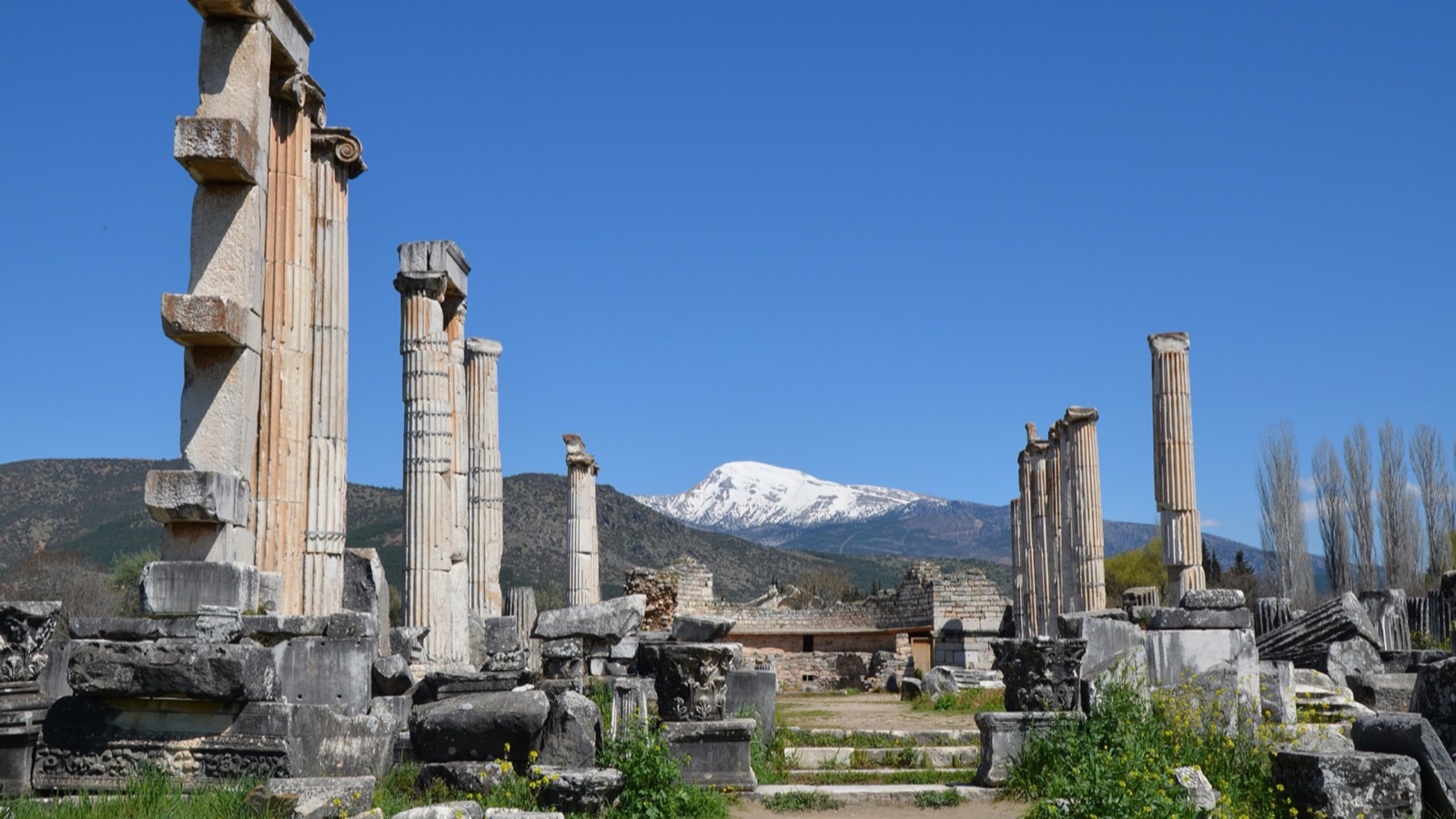
About Aphrodisias
Local marble quarries and a celebrated sculptural tradition made Aphrodisias a leading artistic centre of the Roman world. The Tetrapylon, Sebasteion reliefs, stadium and Temple of Aphrodite reveal both its religious identity and remarkable stone craftsmanship.
History
Although settlement around Geyre reaches back into prehistory, Aphrodisias took shape as a city in the Hellenistic period. The cult of Aphrodite and close ties with Roman rulers brought privileges. Marble quarries, sculpture workshops and monumental buildings made it a major cultural centre in the first to third centuries CE. In late antiquity it was a provincial capital and bishopric, later known as Stavropolis; the temple was converted into a basilica. The city and its northeastern marble quarries joined the UNESCO World Heritage List in 2017.
Highlights and principal structures
- Tetrapylon
- Sebasteion
- Temple of Aphrodite
- Stadium
- Theatre
- Hadrianic Baths
- Sculptor's workshop and museum
Historical period
Hellenistic–Roman–Late Antique