About Troya
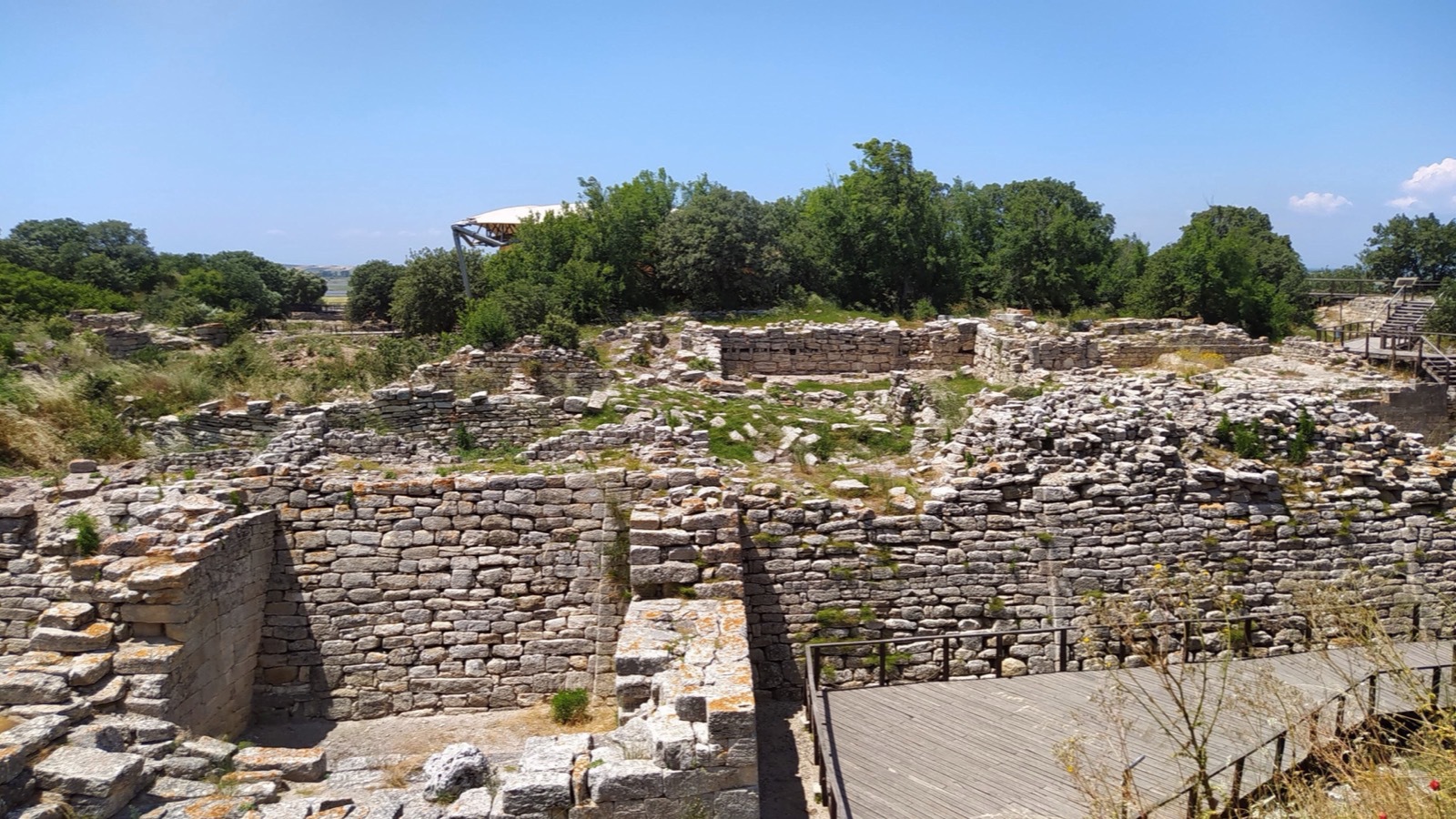
At Hisarlık overlooking the Dardanelles, Troy is a foundational archaeological site whose settlement layers accumulated over millennia. Bronze Age walls, gates and buildings document a long-lived community between the Aegean, Anatolia and Black Sea. Its association with Homer's Iliad also made it a universal cultural symbol.
History
Settlement began in the early third millennium BCE and continued into Roman times through the principal phases conventionally called Troy I–IX. Troy II's monumental architecture and the strong defences of Troy VI and VII demonstrate Bronze Age importance. Excavations from the 1870s brought international fame, although early methods and the removal of finds abroad remain controversial. The Hellenistic and Roman city of Ilion acquired an Athena sanctuary, odeon and public buildings. Troy entered the UNESCO World Heritage List in 1998.
Highlights and principal structures
- Troy II ramped gate and megarons
- Troy VI walls
- Troy VII settlement layer
- Temple of Athena remains
- Roman odeon
- Sanctuary and defensive gates
Historical period
Bronze Age–Roman