About Assos
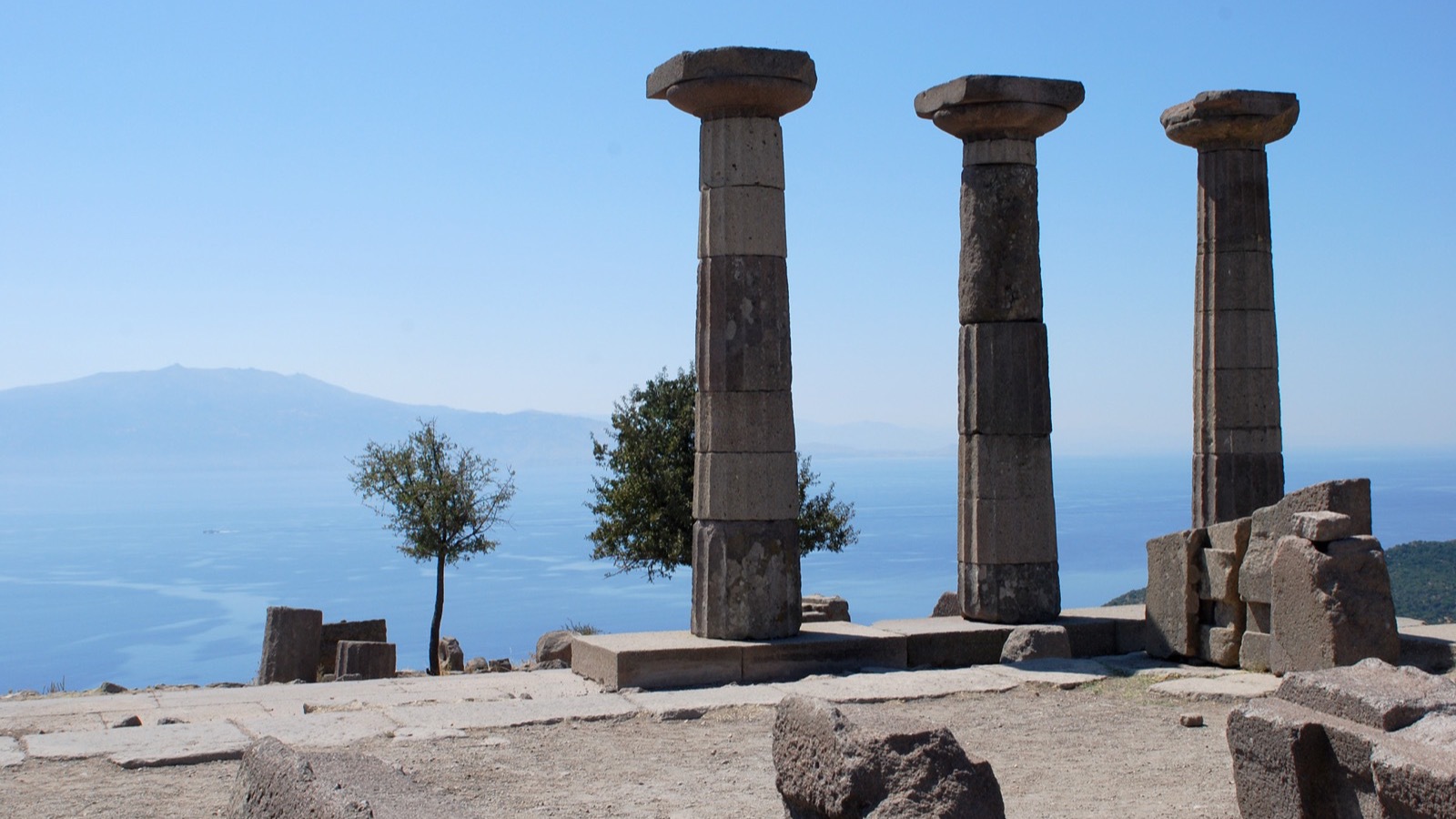
On a volcanic hill overlooking the Edremit Gulf, Assos is a striking settlement of the Troad, defined by walls and a terraced city plan. Its acropolis Temple of Athena is a notable early example of the Doric order in Anatolia. The lower town, agora, theatre, necropolis and harbour reveal a commercial centre connected to the Aegean.
History
Although settlement traces reach back to the Bronze Age, Assos developed a clear urban identity in the seventh and sixth centuries BCE. Under Hermias in the fourth century BCE, it hosted a philosophical circle that included Plato's students Erastus and Coriscus, as well as Aristotle. It later passed through Persian, Macedonian, Pergamene and Roman rule. Under Rome it remained a regional port and production centre. It became a bishopric in early Christianity, while Byzantine occupation adapted its defences and urban fabric to new needs.
Highlights and principal structures
- Temple of Athena
- Theatre
- Agora and bouleuterion
- City walls
- Western necropolis
- Ancient harbour
Historical period
Archaic–Roman