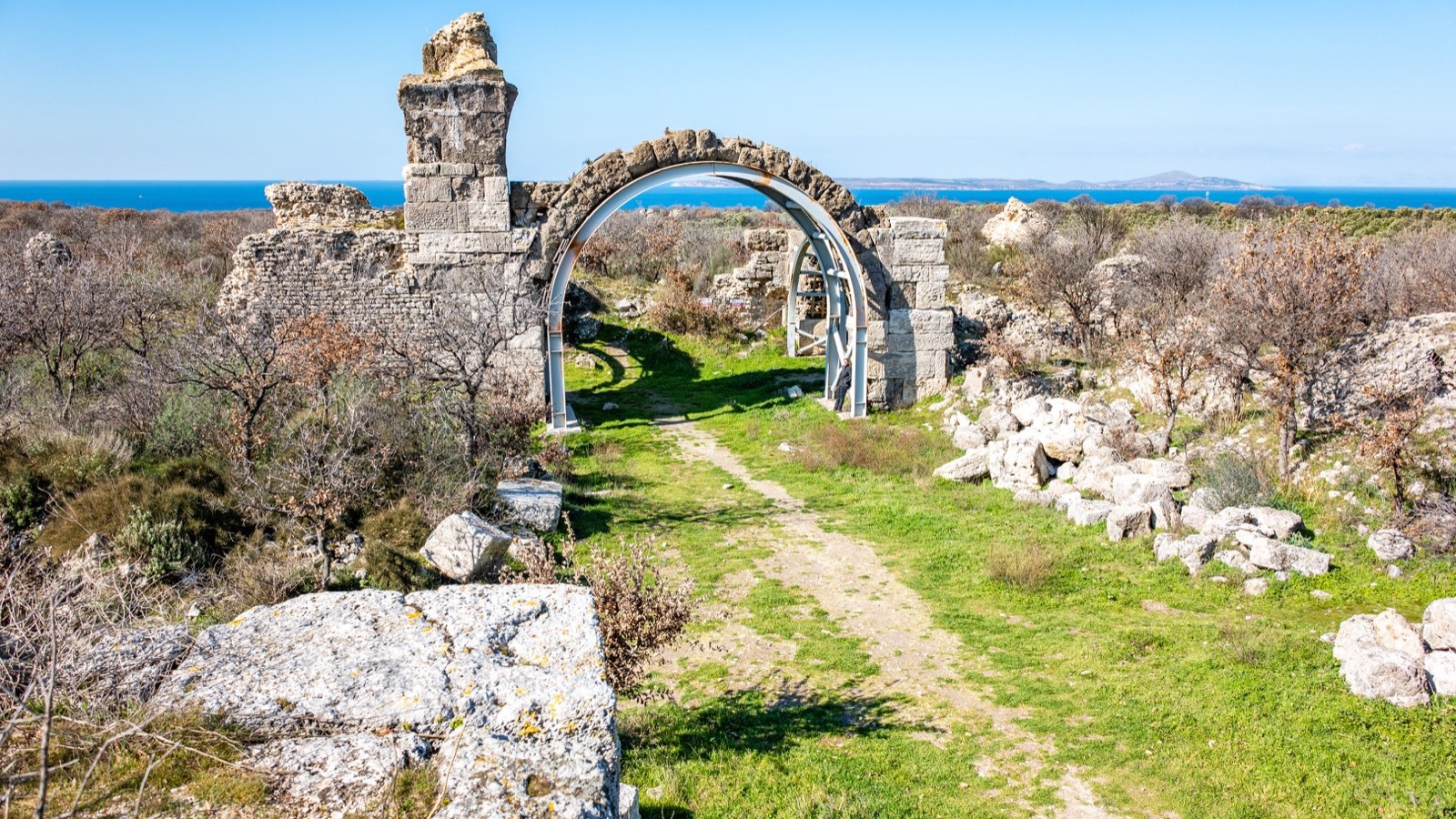
About Alexandria Troas
With extensive walls, monumental baths and a harbour opening onto the Aegean, Alexandria Troas was a major Hellenistic and Roman city. Near Dalyan village in Ezine, its remains reveal a port connected to Mediterranean trade, production and transport networks.
History
Antigonus founded the city as Antigoneia in the late fourth century BCE. Under Lysimachus it was renamed Alexandria Troas in honour of Alexander the Great. It expanded as a privileged Roman colony, and its harbour played an important role in shipping between Italy and Anatolia. The large bath-gymnasium complex, theatre, agora and kilometres of walls reflect this prosperity. Mentioned in the New Testament in connection with Paul's journeys, it remained a bishopric in late antiquity. The silting of its harbour and changes in regional conditions contributed to its gradual decline.
Highlights and principal structures
- Baths of Herodes Atticus
- Ancient harbour and breakwaters
- Theatre
- Agora
- Odeon
- City walls and gates
Historical period
Hellenistic–Roman