About Tripolis
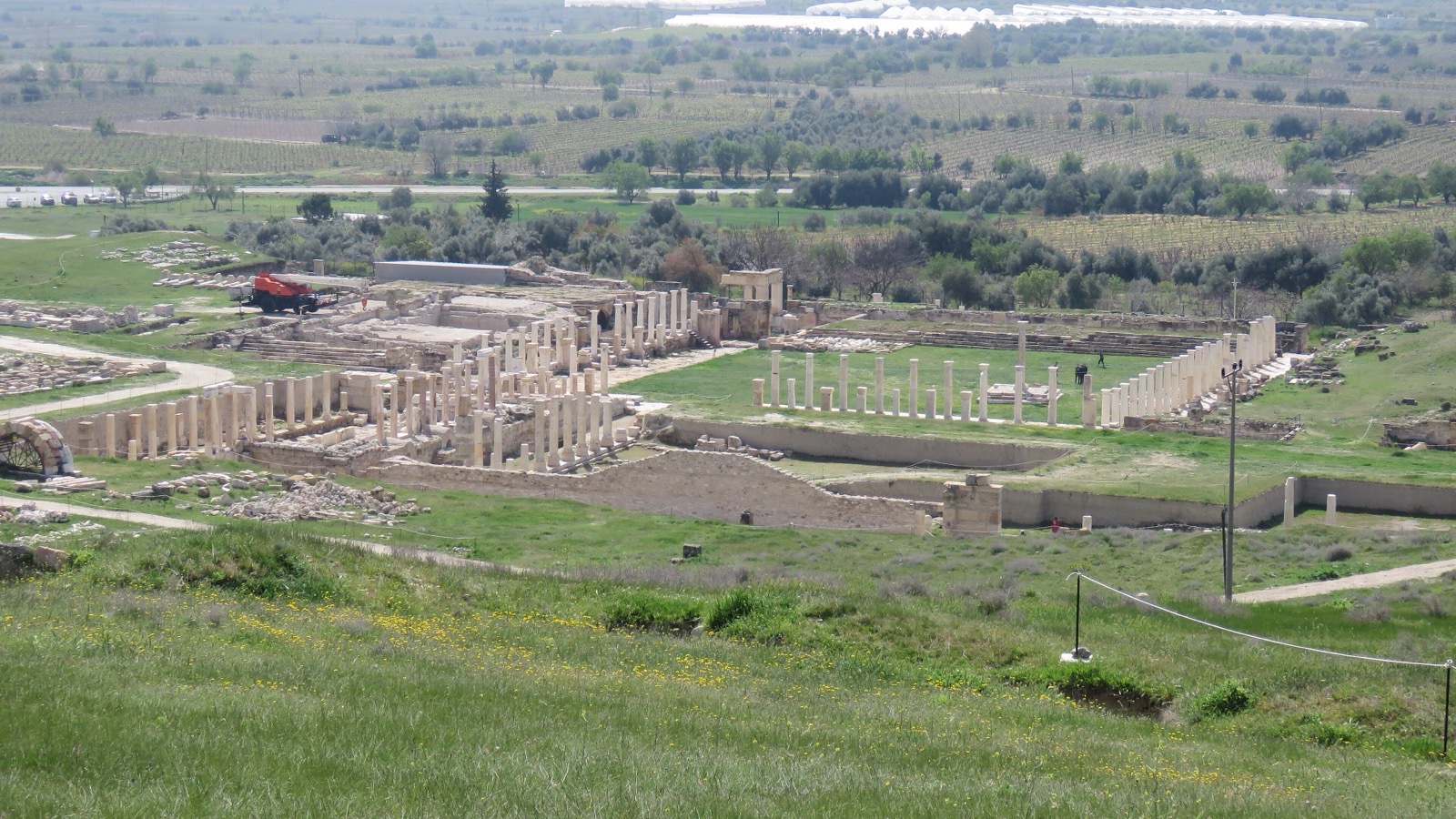
Near Buldan, Tripolis developed on the road connecting the Lycus and Maeander valleys. Colonnaded streets, monumental gates, agora and colourful wall coverings reveal the organisation of a prosperous Roman commercial centre.
History
Although earlier settlements existed nearby, Hellenistic Tripolis is also associated with the name Apollonia. Its position between Lydia, Caria and Phrygia favoured regional trade. Roman streets, baths, theatre and agora created a monumental townscape. Many buildings were repaired after earthquakes. Walls and churches appeared when it became a bishopric in late antiquity. Excavations investigate the city plan alongside production and commercial areas.
Highlights and principal structures
- Colonnaded street
- Hierapolis Street
- Monumental fountain
- Agora
- Roman bath
- Theatre
- Byzantine walls and church
Historical period
Hellenistic–Roman–Byzantine