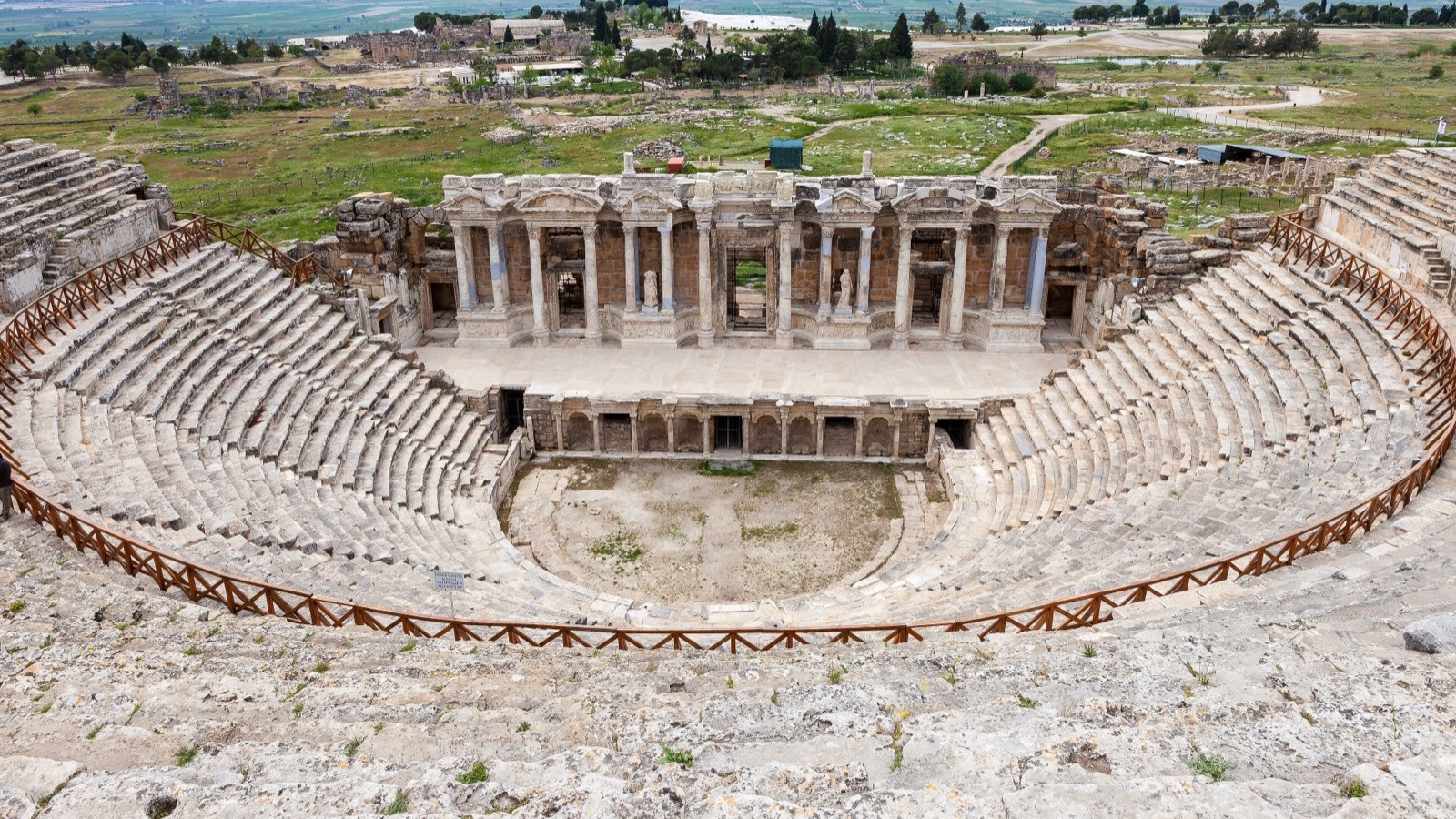
About Hierapolis
Above Pamukkale's travertines, Hierapolis developed around hot springs as a centre of healing, worship and burial. Its theatre, Ploutonion, baths and extensive necropolis bring natural formations and ancient architecture into one landscape.
History
Founded under the kingdom of Pergamon in the second century BCE, Hierapolis passed to Rome after 133 BCE. Repeatedly damaged by earthquakes, it was rebuilt with monumental architecture, especially in the second and third centuries CE. Thermal waters served healing and religious practices, while the gas-emitting Ploutonion was associated with underworld gods. The tradition of the Apostle Philip made it an early Christian pilgrimage centre. Hierapolis-Pamukkale entered the UNESCO World Heritage List in 1988.
Highlights and principal structures
- Roman theatre
- Ploutonion
- Frontinus Gate and street
- Northern necropolis
- Ancient pool and baths
- Martyrium of Saint Philip
Historical period
Hellenistic–Roman–Byzantine