About Perge
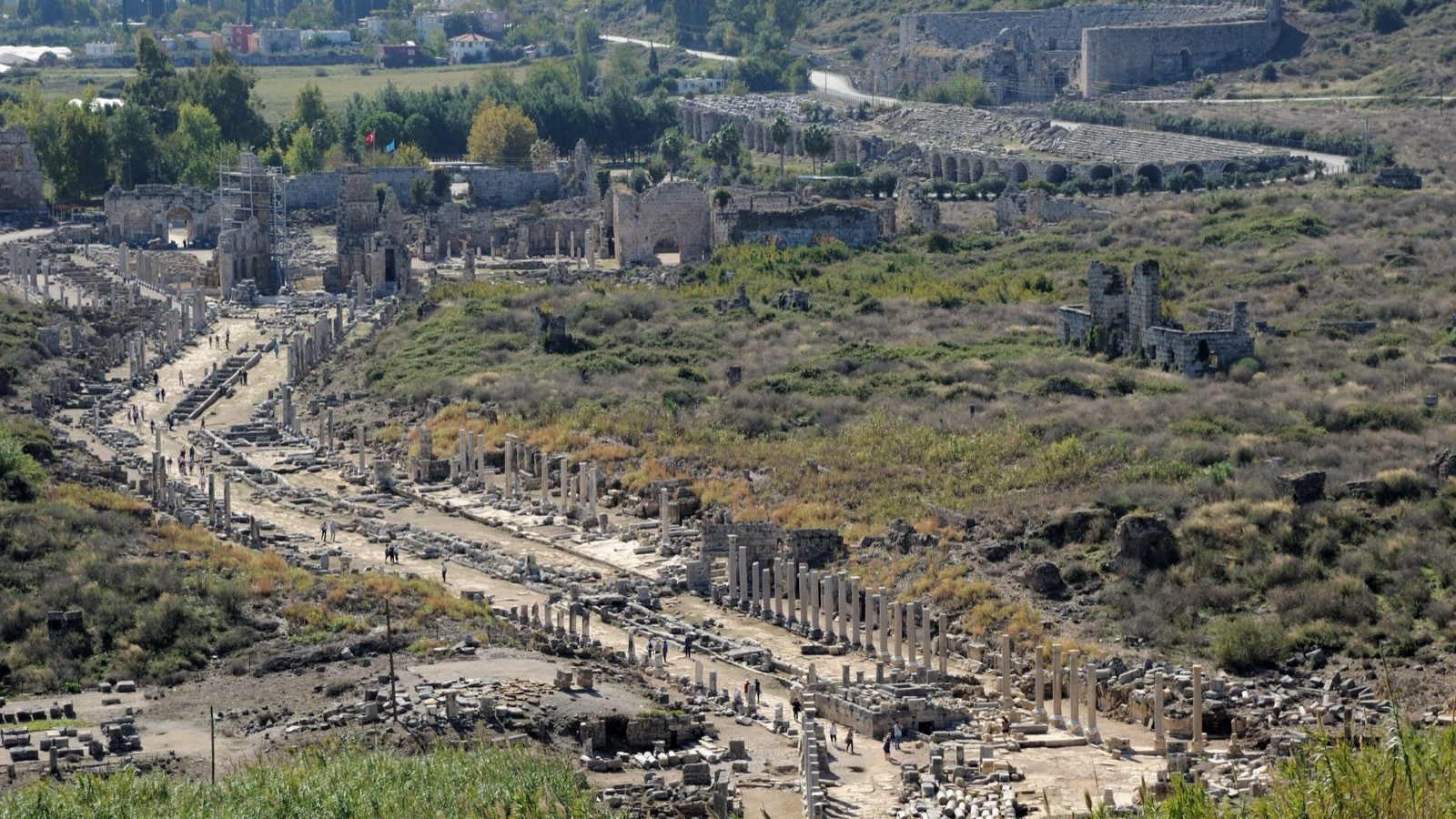
On the Aksu Plain, Perge exemplifies Pamphylian urban planning with its twin-towered Hellenistic gate, colonnaded street divided by a water channel, stadium and theatre. Rich sculptural finds reflect its public prestige under Rome.
History
Perge's roots extend into the Bronze and Iron Ages. After Persian and Hellenistic rule, it entered Rome's sphere of influence in 188 BCE. Baths, fountains, a stadium and monumental streets expanded particularly in the first to third centuries CE. The cult of Artemis Pergaia enjoyed regional renown. Mentioned in the New Testament in connection with Paul and Barnabas, Perge became an important late antique bishopric. Changes in access along the Cestrus River and regional insecurity contributed to decline.
Highlights and principal structures
- Hellenistic twin-towered gate
- Colonnaded street and water channel
- Stadium
- Theatre
- South bath
- Agora
- Monumental fountains
Historical period
Archaic–Hellenistic–Roman–Byzantine