About Olympos
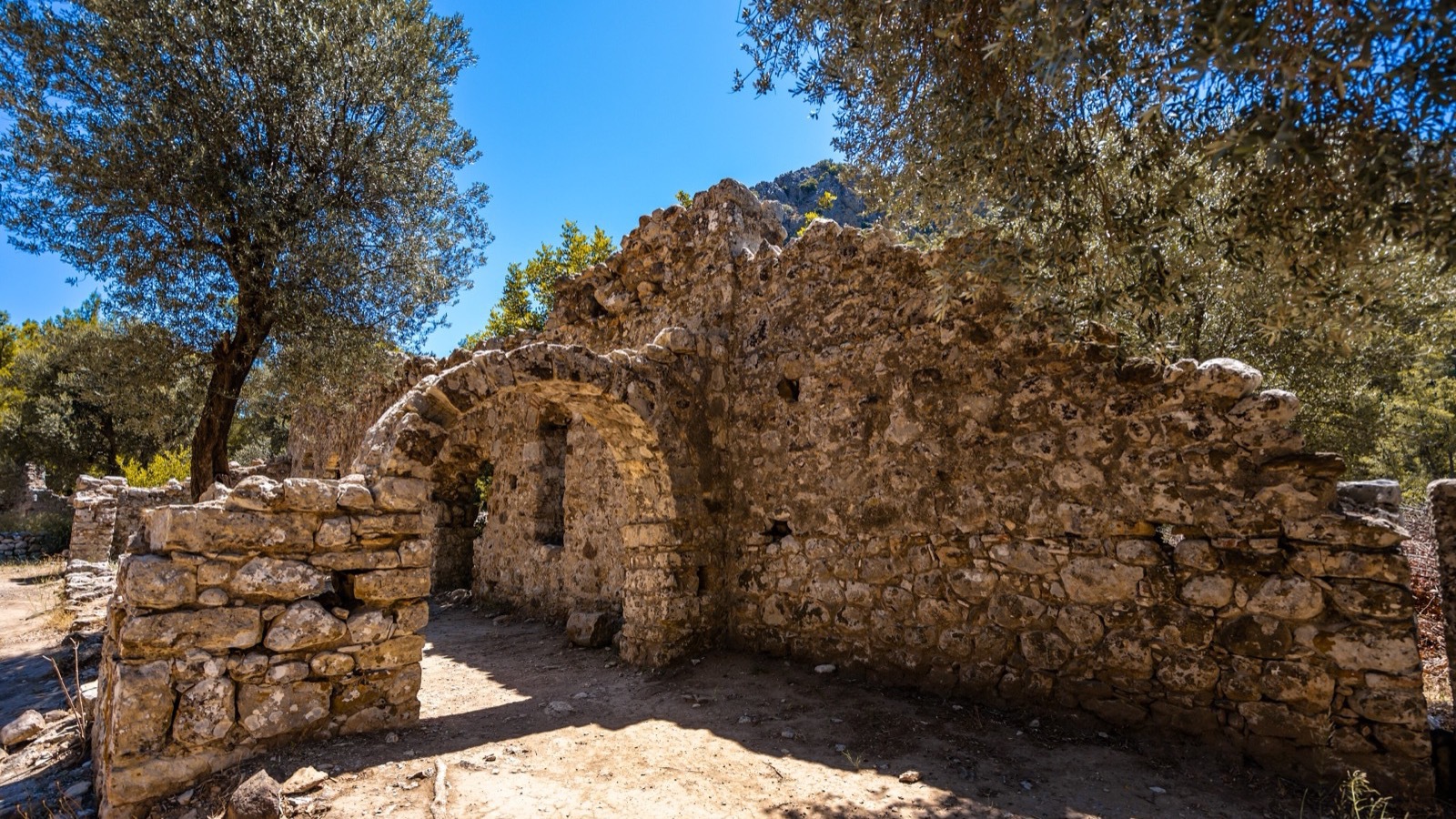
In a wooded valley of the Beydağları, Olympos spreads along both banks of a stream. Harbour structures, tombs and late antique churches survive amid dense vegetation. Between mountain and sea, it vividly illustrates the natural setting of Lycian coastal cities.
History
Olympos was an important member of the Lycian League in the second century BCE. Associated with the pirate power of Zenicetes in the first century BCE, it came under Roman control after the campaign of Servilius Vatia. Monumental tombs, baths and public buildings developed around the harbour under the Empire. Numerous basilicas and religious buildings were added when it became a bishopric in late antiquity. Earthquakes, flooding and shifts in coastal trade contributed to contraction.
Highlights and principal structures
- Monumental harbour tombs
- Episcopal palace
- Basilicas
- Theatre
- Temple gateway
- Necropolis
- Riverside buildings
Historical period
Hellenistic–Roman–Byzantine