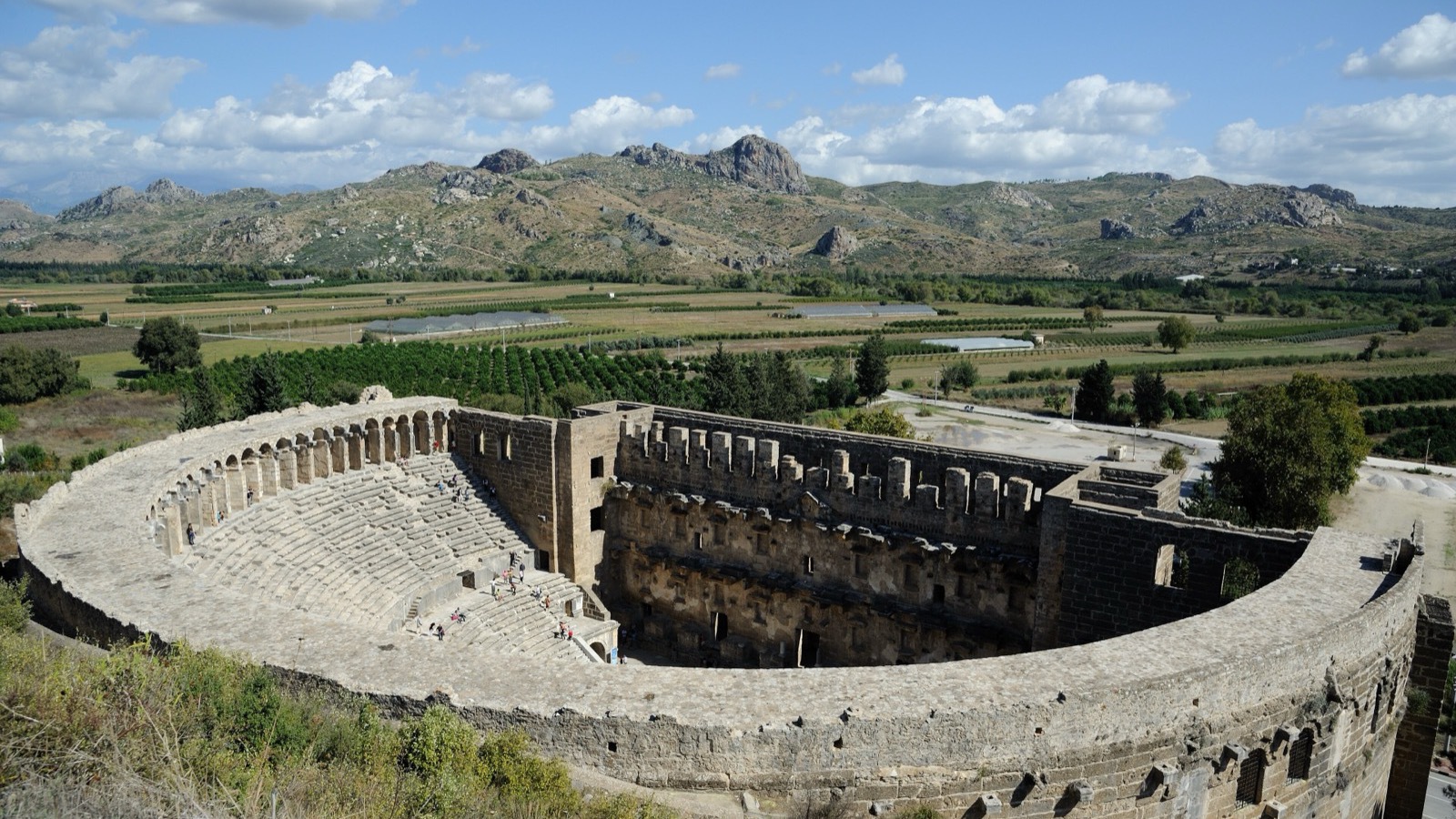
About Aspendos
In the Köprüçay valley, Aspendos has one of the world's best-preserved Roman theatres, with a largely standing stage building and celebrated acoustics. The hilltop basilica, agora and nymphaeum, together with the aqueduct system, reveal a developed city beyond the theatre.
History
Aspendos's early history is rooted in Pamphylia's local communities. Connected to the Mediterranean by the Eurymedon River, it prospered through grain, viticulture, salt and horse trading. Following Persian and Hellenistic rule, it flourished under Rome, particularly in the second and third centuries CE. The local architect Zeno designed the theatre during Marcus Aurelius's reign. Reuse of its stage building as a palace or caravanserai in Seljuk times helped the monument survive.
Highlights and principal structures
- Roman theatre
- Aqueduct and siphon system
- Basilica
- Agora
- Nymphaeum
- Stadium
- Eurymedon Bridge
Historical period
Classical–Hellenistic–Roman