About Nemrut Dağı
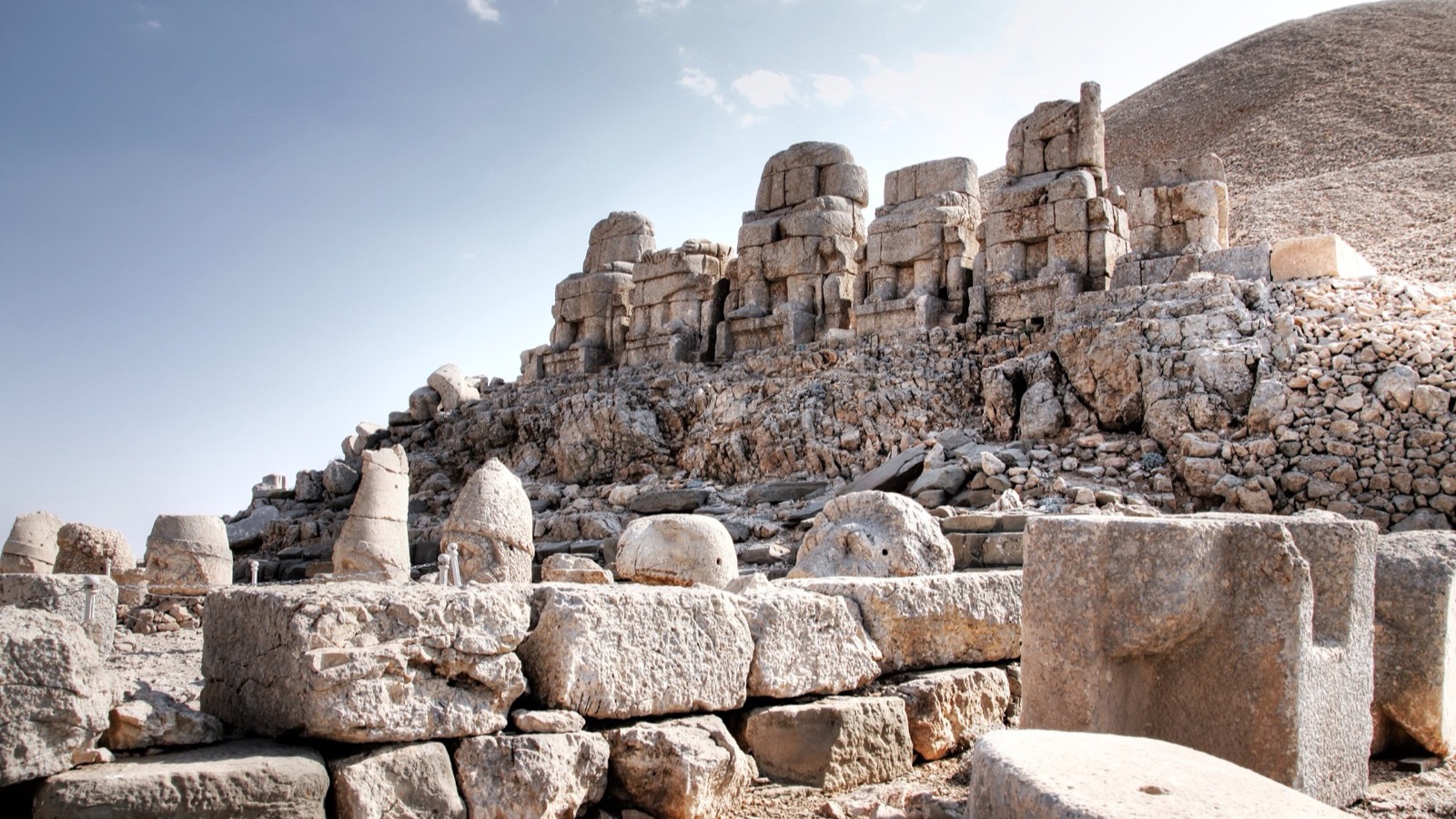
On Mount Nemrut's summit, more than 2,150 metres high, colossal divine heads and a stone tumulus form the funerary sanctuary of Antiochus I of Commagene. Terraces facing sunrise and sunset integrate royal worship with the mountain landscape.
History
In the first century BCE, Antiochus I created a cult programme emphasising his dynasty's Persian and Macedonian ancestry. Colossal statues placing the king beside gods, ancestral reliefs and a long cult inscription were installed on the eastern and western terraces. The rubble-stone tumulus is thought to cover his tomb, although no burial chamber has yet been found. Earthquakes and weathering separated the statues' heads from their bodies. Mount Nemrut entered the UNESCO World Heritage List in 1987.
Highlights and principal structures
- Eastern and western terraces
- Colossal divine statues
- Stone tumulus
- Lion Horoscope relief
- Cult inscription and ancestral stelae
Historical period
Hellenistic–Roman