About Myra
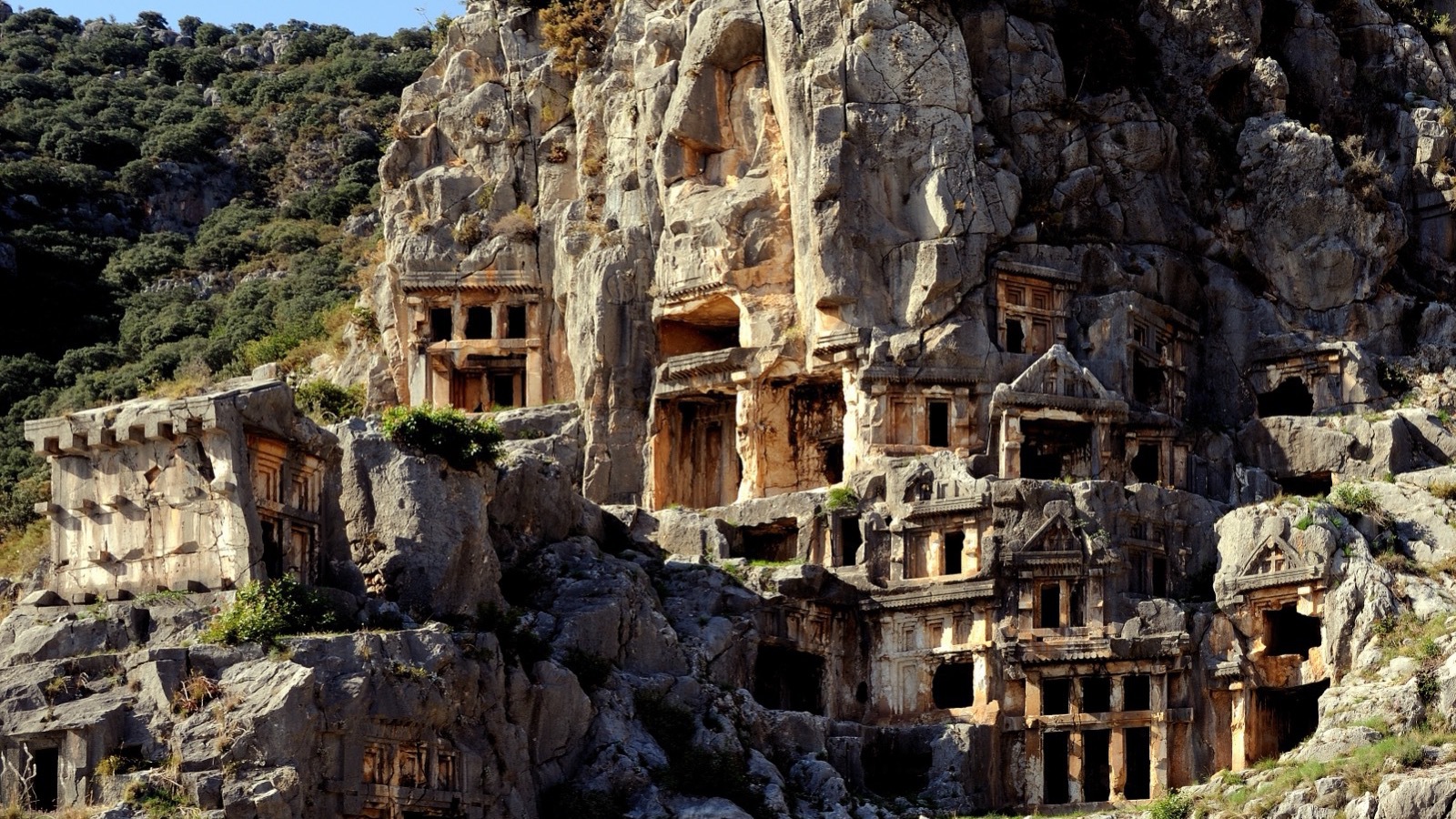
At Demre, Myra is known for rock-cut tombs with formerly painted façades behind one of Lycia's largest theatres. Nearby Andriake harbour and the Church of Saint Nicholas complete its place in ancient trade and early Christian history.
History
Although its earliest phases remain poorly known, Myra emerged as a powerful Lycian centre in the Classical period. It was one of the Lycian League cities entitled to three votes. Under Rome it became a regional administrative centre, with a large theatre and baths; Andriake played an important role in Mediterranean grain trade. As the episcopal seat of Saint Nicholas, Myra became a Byzantine pilgrimage destination. Sediment from the Myros stream buried much of the ancient town. Excavations are uncovering this fabric and its harbour connections.
Highlights and principal structures
- Rock-cut tombs
- Roman theatre
- Andriake harbour
- Granarium
- Synagogue
- Church of Saint Nicholas
- Roman baths
Historical period
Classical–Roman–Byzantine