About Metropolis
On a hill overlooking the Torbalı Plain, Metropolis developed between Ionia and Lydia. Its theatre, council house, mosaic-decorated residences and Roman baths form a readable sequence from Hellenistic to Byzantine urban life. Fertile surrounding land underpinned its prosperity.
History
Although prehistoric settlements existed nearby, urbanisation accelerated in the third century BCE. Pergamene influence encouraged public buildings including the theatre and council house. Under Rome, roads, baths, residences and commercial spaces expanded, supported by production networks in the Küçük Menderes basin. It became a bishopric in late antiquity, while defensive needs concentrated settlement within a smaller area. The acropolis and surroundings were reorganised under Byzantium. Excavations document its plan, social life and long-term transformation.
Highlights and principal structures
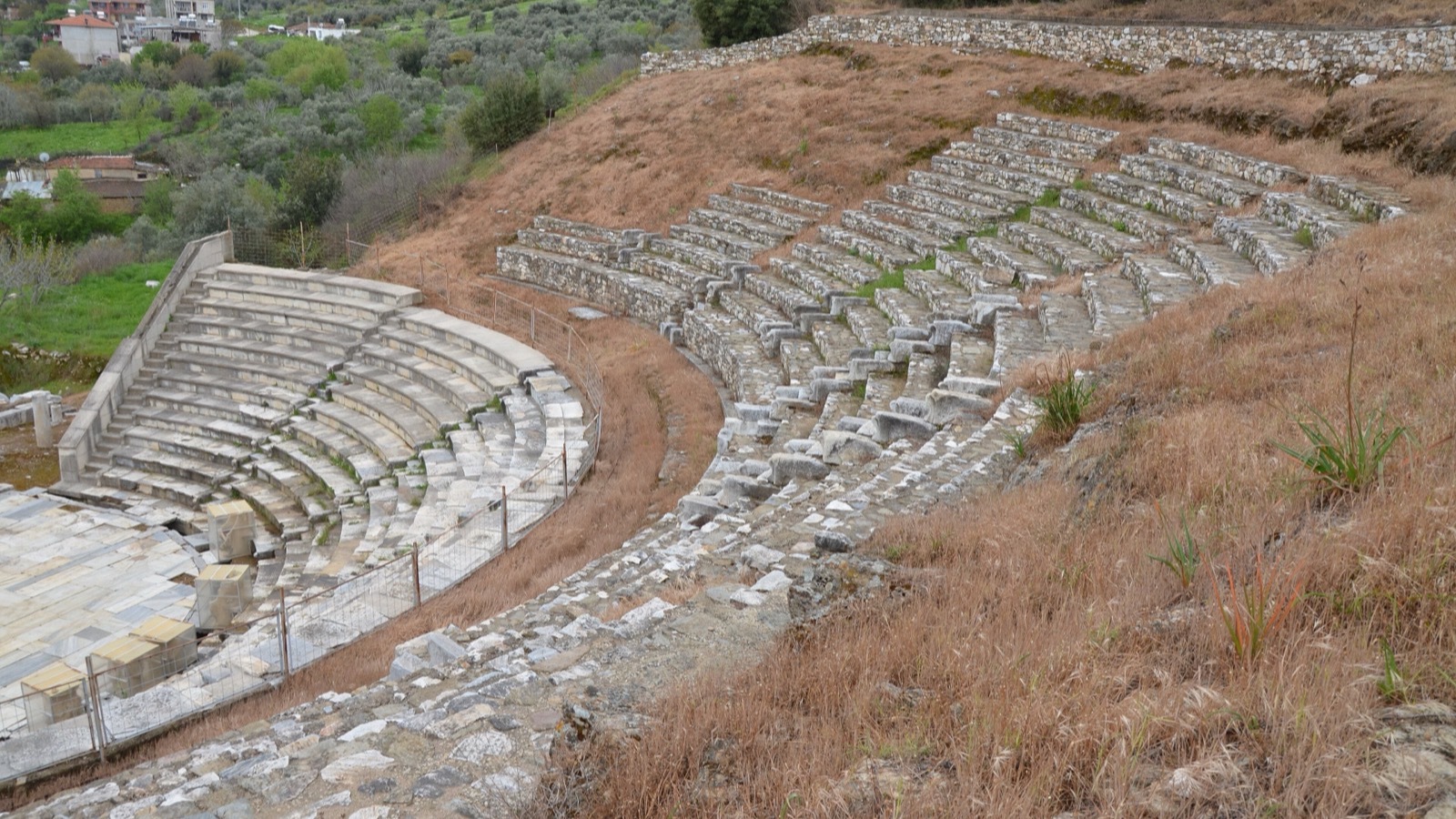
- Hellenistic theatre
- Bouleuterion
- Mosaic hall
- Roman baths
- Peristyle houses
- Acropolis and Byzantine castle
Historical period
Hellenistic–Roman–Byzantine