About Pergamon
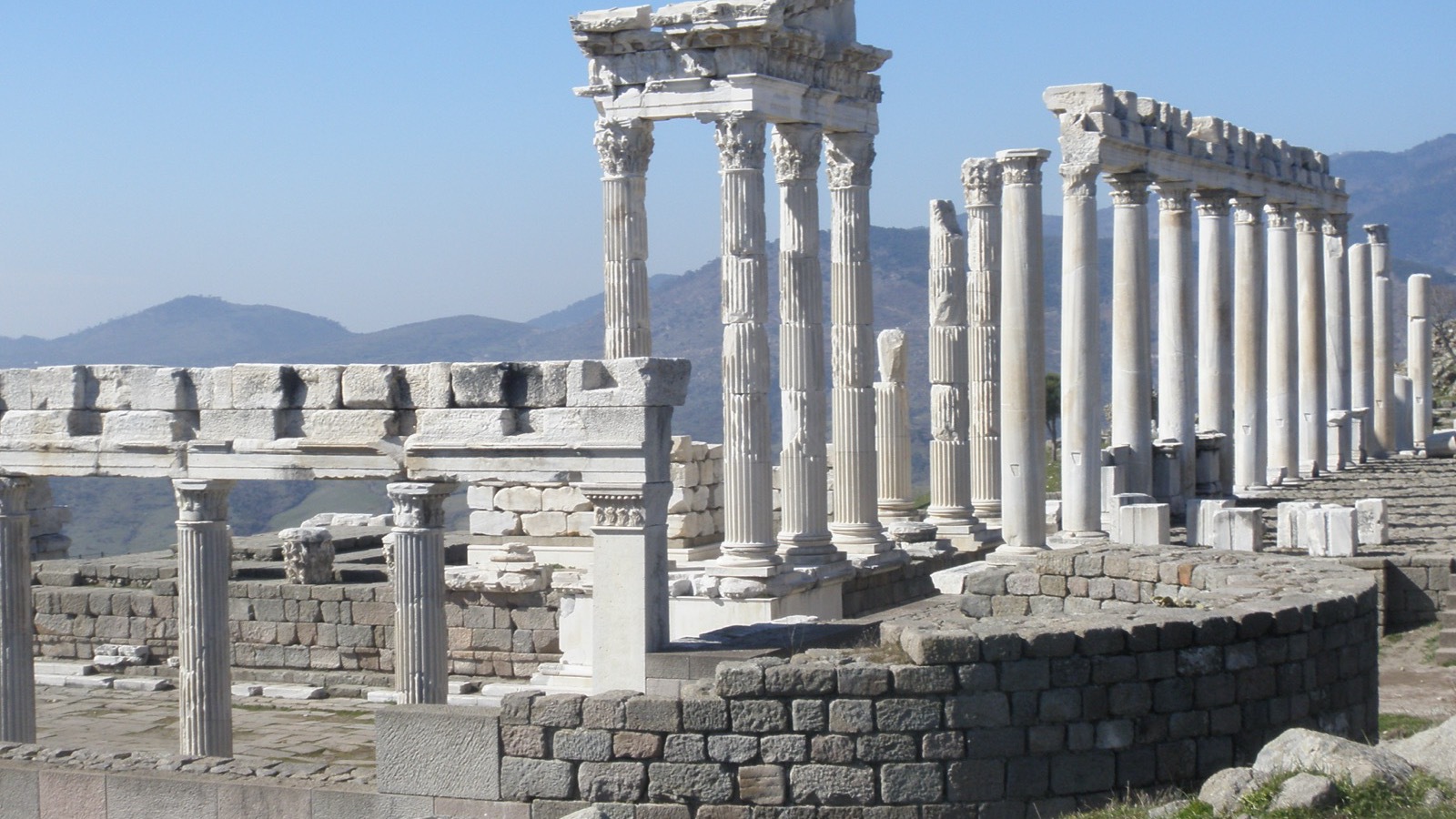
Rising above the Bakırçay Plain, Pergamon was a major ancient cultural centre with a commanding acropolis, the Asclepieion healing sanctuary and a multilayered townscape. Palaces, temples, library and a steep hillside theatre express the power and distinctive planning of the Attalid capital.
History
Despite earlier settlement, Pergamon became a royal capital in the third century BCE under Philetaerus and the Attalid dynasty. Eumenes II expanded the acropolis with monumental terraces; the library, Athena sanctuary and Great Altar formed part of this cultural programme. After the kingdom was bequeathed to Rome in 133 BCE, the city became a leading centre of Asia. The Asclepieion gained fame for healing and worship, while the Red Hall preserves changing Roman and late antique uses. Pergamon and its multilayered cultural landscape entered the UNESCO World Heritage List in 2014.
Highlights and principal structures
- Acropolis
- Steep hillside theatre
- Temple of Trajan
- Great Altar terrace
- Asclepieion
- Red Hall
Historical period
Hellenistic–Roman–Byzantine