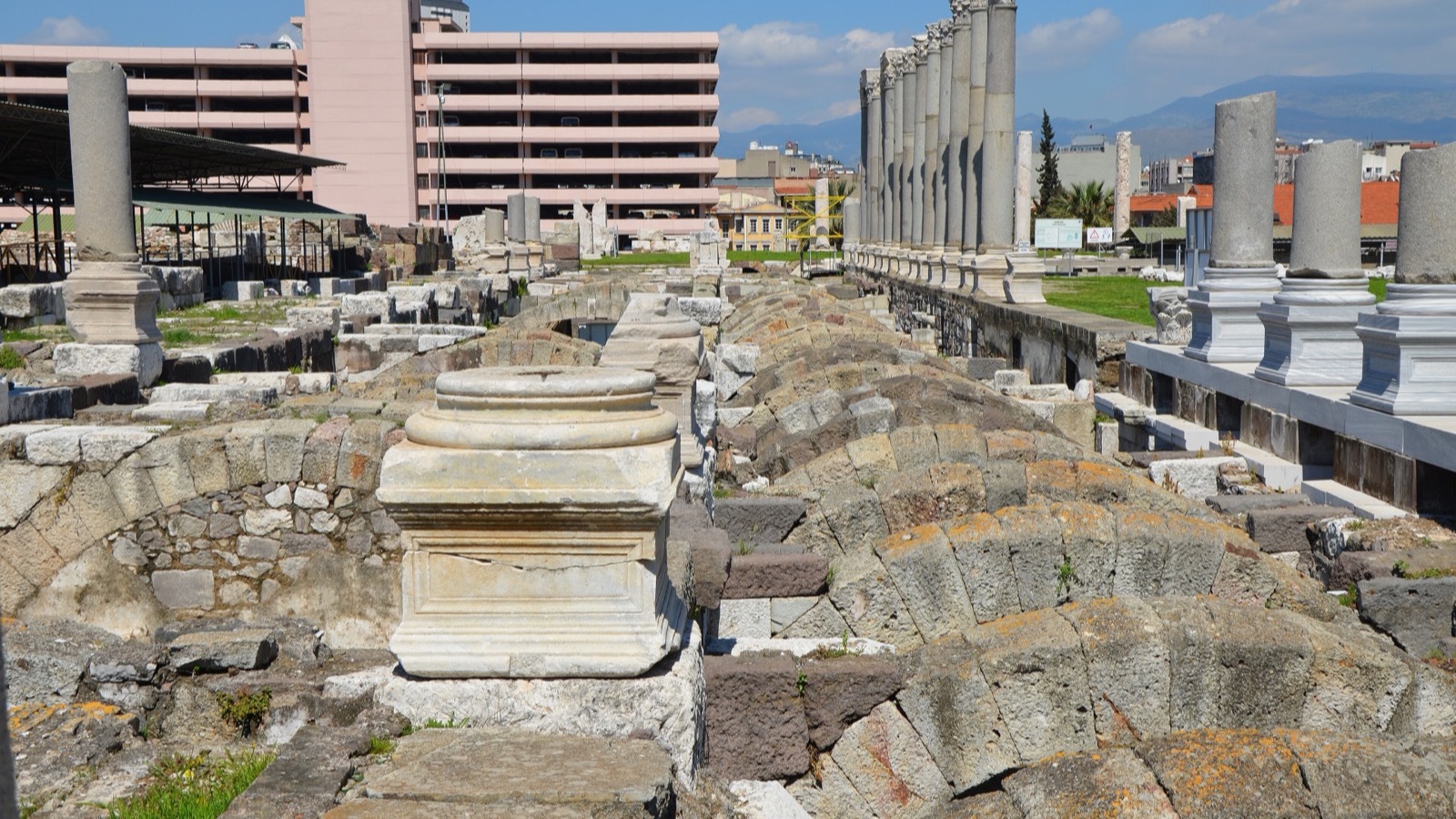
About Smyrna
In central İzmir, the Agora of Smyrna is the most visible part of the ancient city beneath the modern one. Basilica basement galleries, arched water channels, stoas and graffiti illuminate Roman commerce, law and daily life. Kadifekale's acropolis completes the broader urban landscape.
History
The earlier Smyrna developed at Bayraklı. The city was refounded below Kadifekale in the late fourth century BCE with a regular plan. Following Hellenistic rule, its harbour and roads made it a leading Roman commercial centre of Asia. The earthquake of 178 CE caused major destruction; imperial reconstruction gave the agora much of its surviving monumental form. Remaining within the settlement's centre under Byzantium and the Ottomans, the area preserves the archaeological memory of multilayered İzmir.
Highlights and principal structures
- Smyrna Agora
- Roman basilica
- West stoa
- Arched basement galleries
- Ancient water channels
- Kadifekale acropolis
Historical period
Archaic–Hellenistic–Roman