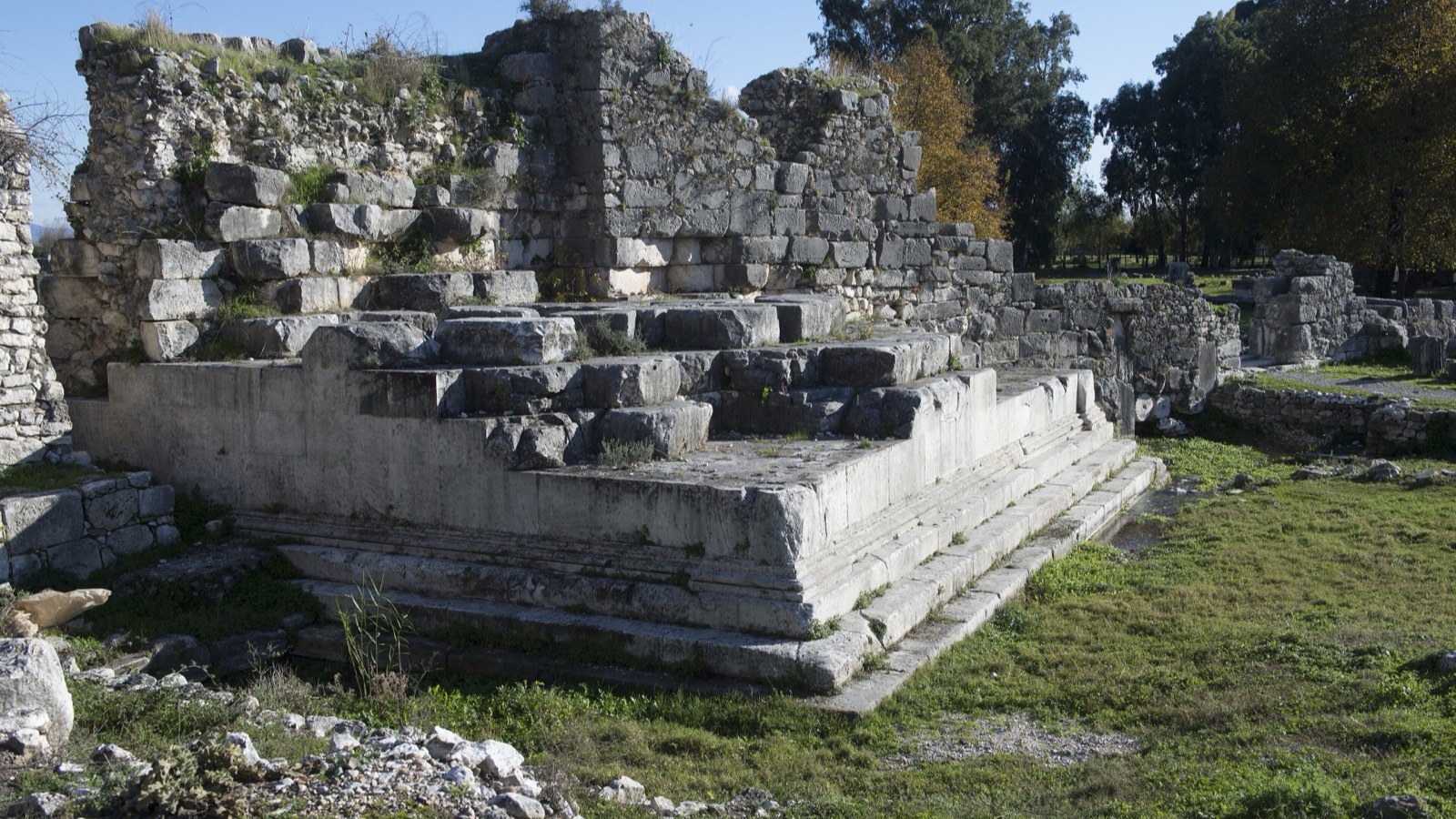
About Limyra
At the edge of the Finike Plain, Limyra preserves several phases of Lycian history, from Pericle's funerary monument to a Roman bridge and Byzantine buildings. Springs and channels weave through a landscape of monuments and a former episcopal centre.
History
Limyra rose as the eastern Lycian ruler Pericle's administrative centre in the fourth century BCE. The acropolis and heroon expressed his local power. The city expanded towards the plain in Hellenistic and Roman times; a monumental cenotaph honoured Augustus's grandson Gaius Caesar. Its bridge, notable for low segmental arches, reflects the importance of transport infrastructure. Large churches and walls were added when Limyra became a bishopric in late antiquity.
Highlights and principal structures
- Heroon of Pericle
- Cenotaph of Gaius Caesar
- Limyra Bridge
- Theatre
- Ptolemaion
- Byzantine walls and churches
- Rock-cut tombs
Historical period
Classical–Roman–Byzantine