About Dara
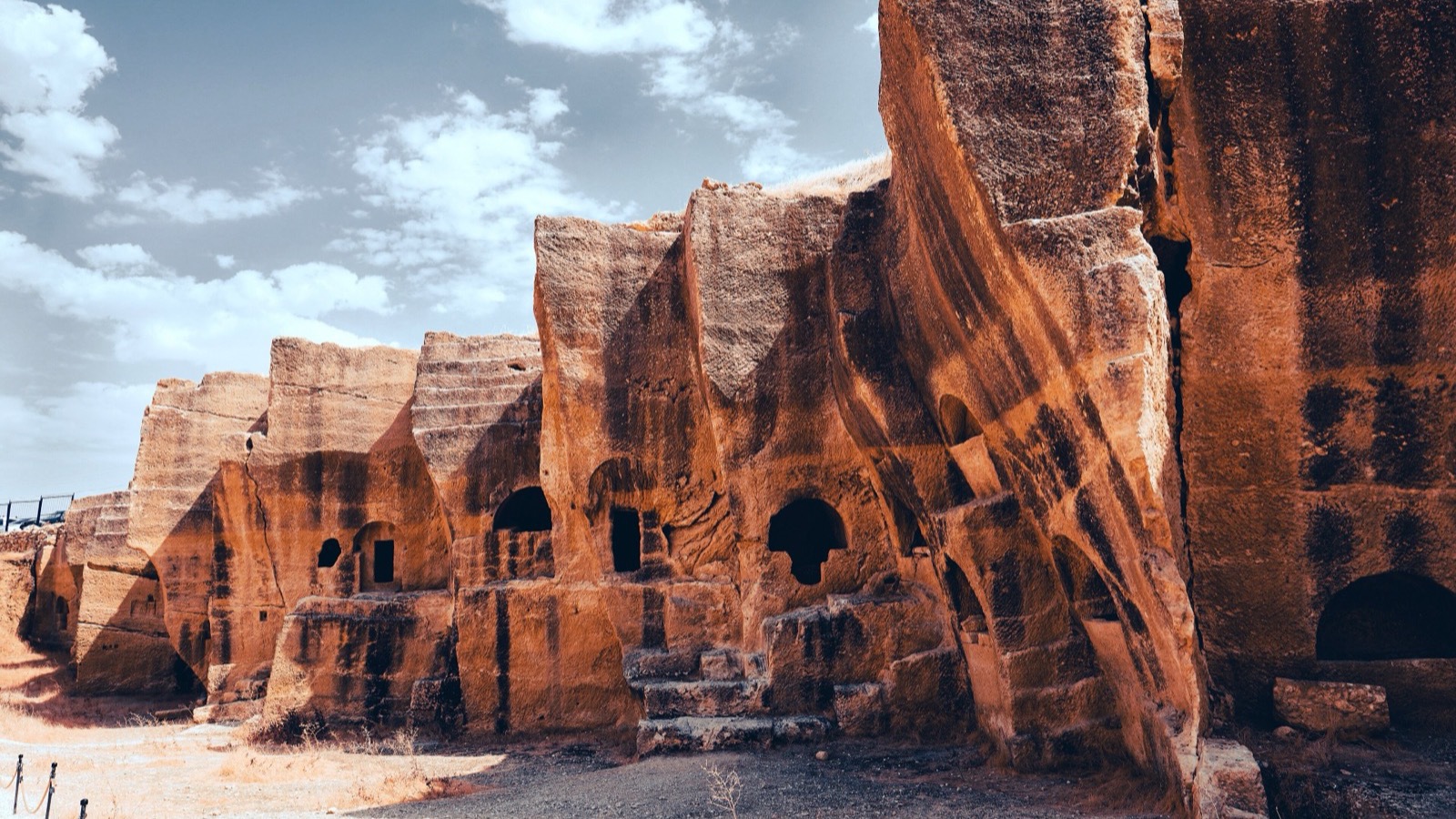
At Oğuz village in Mardin, Dara was a major Eastern Roman military city on the Sasanian frontier. Its rock-cut necropolis, walls, bridges and vast cisterns show how defence and water management were planned together in a dry borderland.
History
Dara was refounded under Emperor Anastasius in the early sixth century to strengthen the Mesopotamian frontier and was called Anastasiopolis. Justinian improved its walls and water system. A major base in the Roman–Sasanian wars, it was the setting of the Battle of Dara in 530. The settlement changed hands between Persian, Byzantine and early Islamic powers and continued on a reduced scale in the Middle Ages. Mass burials and religious arrangements in the necropolis reflect the memory of conflict.
Highlights and principal structures
- Rock-cut necropolis
- Gallery cistern
- City walls and towers
- Bridges and water channels
- Agora street
- Collective burial structure
Historical period
Roman–Byzantine