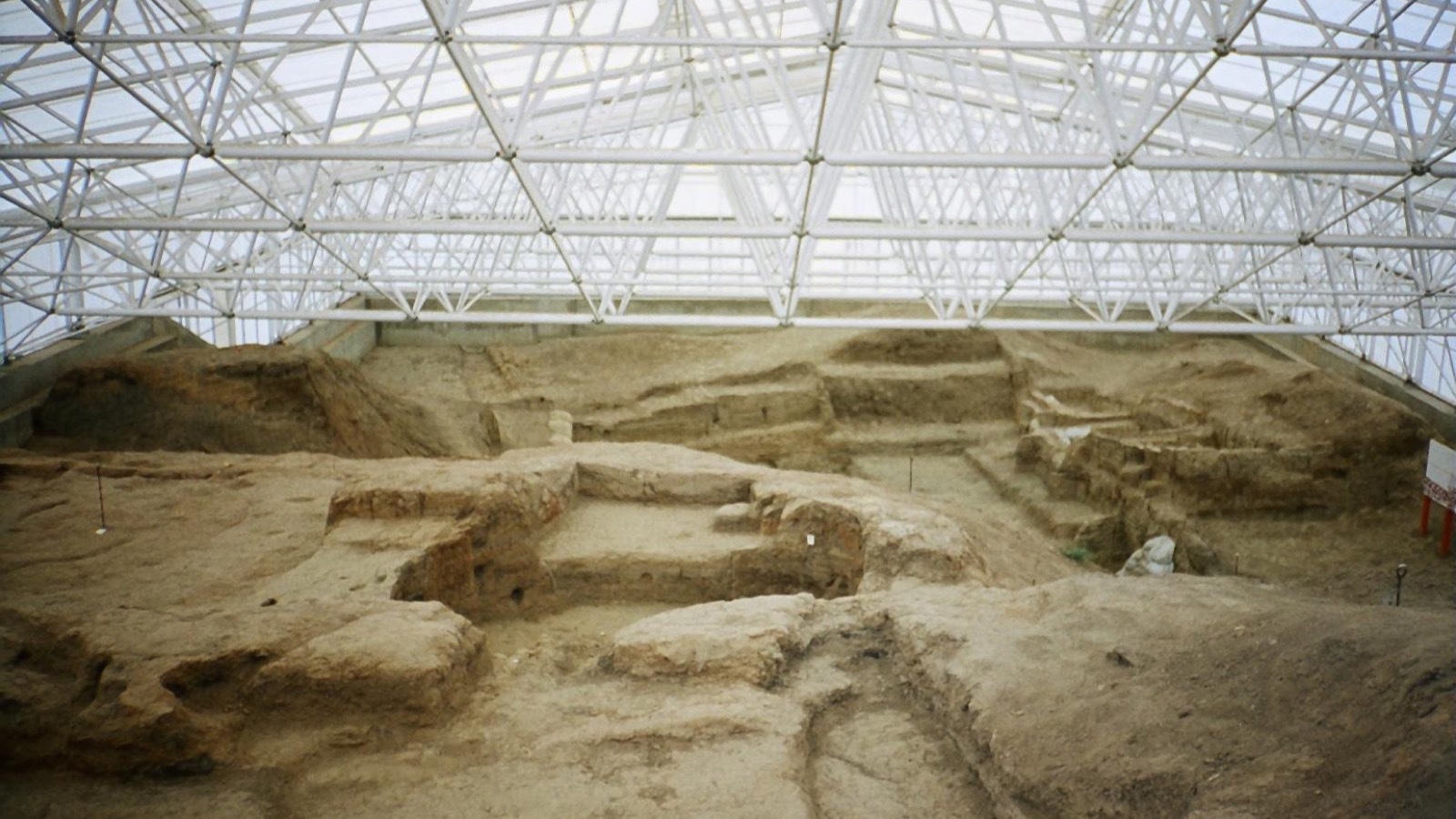
About Çatalhöyük
On the Konya Plain, Çatalhöyük preserves an exceptionally detailed record of Neolithic life through adjoining mudbrick houses, roof entrances, wall paintings and burials beneath floors. Its dense, largely streetless layout brought daily activities and ritual into the same domestic spaces.
History
The East Mound became a large settlement inhabited by thousands between approximately 7400 and 6200 BCE. Houses were repeatedly rebuilt in place; paintings, reliefs, animal horns and burials reinforced household memory. Farming, animal husbandry, hunting and long-distance exchange of raw materials coexisted. Occupation later shifted to the West Mound. Following James Mellaart's excavations in the 1960s, a long-running project begun in 1993 reinterpreted the community using new scientific methods. Çatalhöyük entered the UNESCO World Heritage List in 2012.
Highlights and principal structures
- Adjoining mudbrick houses
- Wall paintings and reliefs
- Roof entrances
- Domestic burials
- Ovens and platforms
- East and West Mounds
Historical period
Neolithic