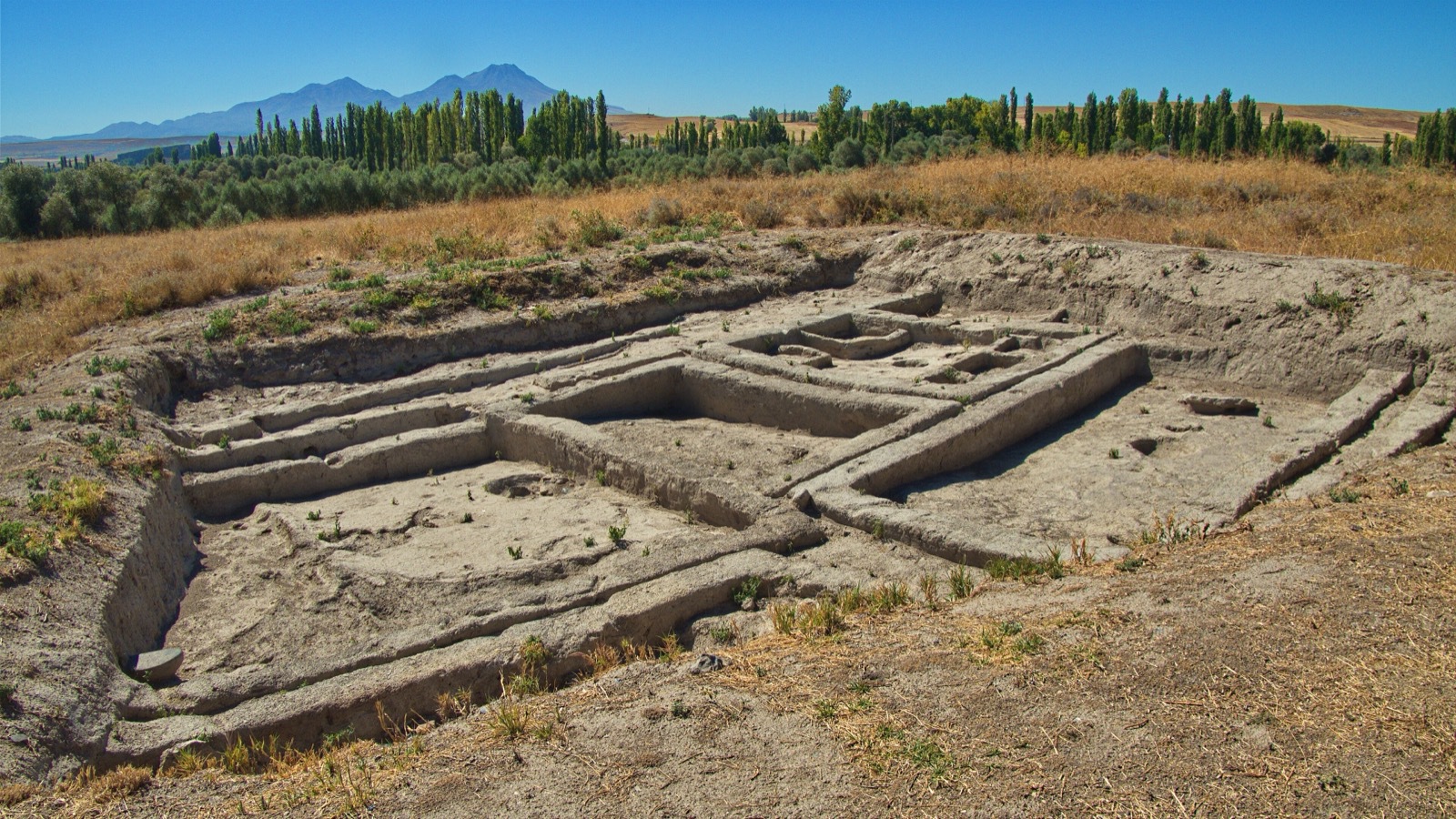
About Aşıklı Mound
In the Melendiz valley, Aşıklı Mound is an early Neolithic settlement illuminating the homes, food and social organisation of communities becoming sedentary around ten thousand years ago. Mudbrick buildings and obsidian working document changing ways of living and producing food.
History
Aşıklı Mound was continuously occupied from the late ninth through the eighth millennium BCE. Its communities built adjoining mudbrick houses, entered through roofs and buried their dead beneath floors. Local resources and Cappadocian obsidian supported hunting, plant gathering and toolmaking. Evidence of sheep and goat management is important for understanding early animal domestication. Excavations explore architectural change and social organisation across a long sequence.
Highlights and principal structures
- Adjoining mudbrick houses
- Special-purpose buildings
- Hearths and ovens
- Intramural burials
- Obsidian workshops
- Experimental Aşıklı village
Historical period
Neolithic