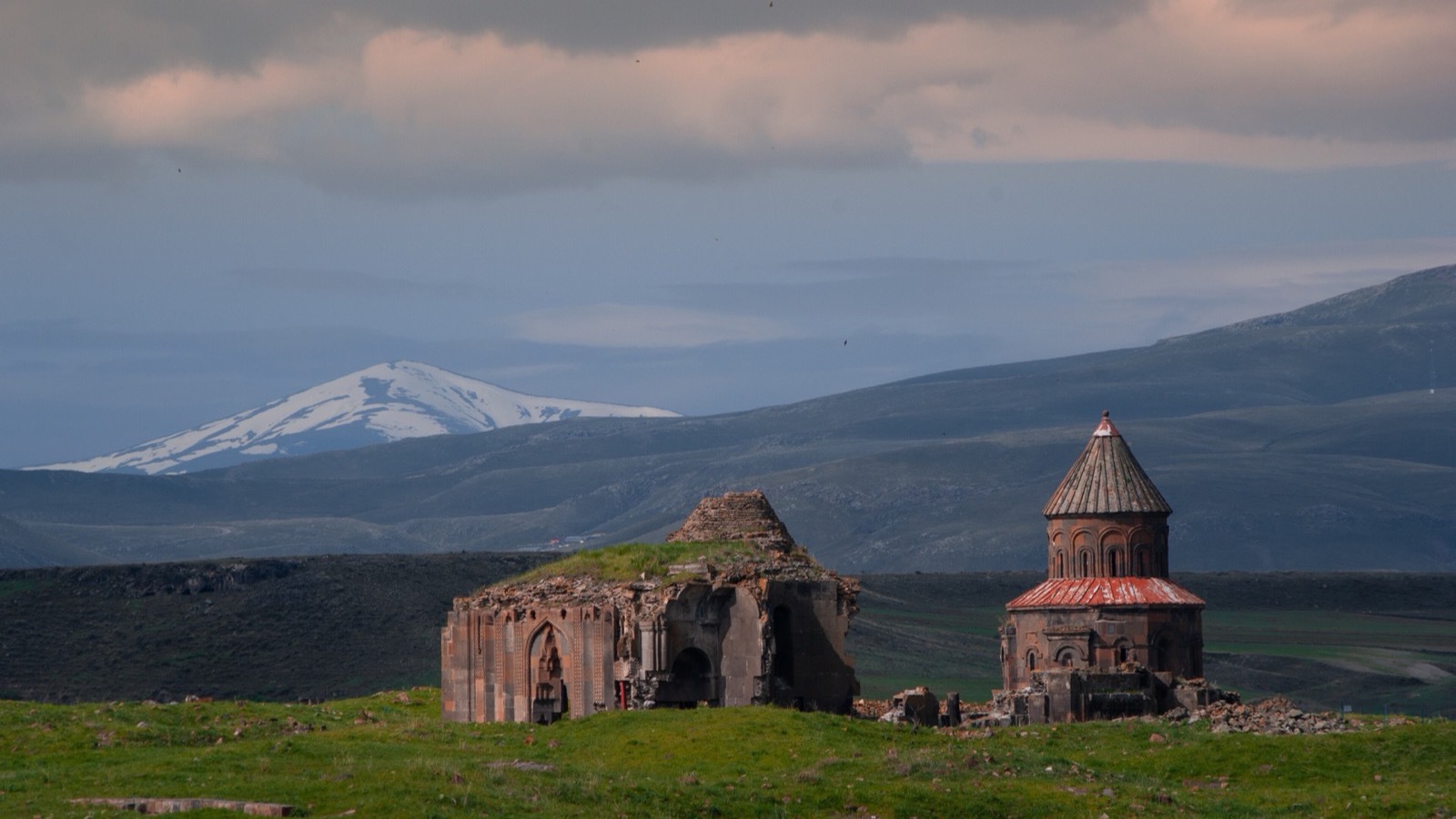
About Ani
Beside the Arpaçay valley, Ani preserves medieval walls, a cathedral, churches, a mosque and bridge remains from a Silk Road city between Anatolia and the Caucasus. Monuments of different faiths and rulers create a striking skyline across the open steppe.
History
Ani became the capital of the Armenian Bagratid kingdom in the tenth century and expanded through trade. It passed first to Byzantine and then Seljuk rule in the eleventh century; mosques and other buildings were added under the Shaddadids. Urban life continued during Georgian and Mongol domination. Earthquakes, shifting trade routes and political instability contributed to depopulation. Combining Armenian, Byzantine, Seljuk and Georgian architectural traditions, Ani was inscribed on the UNESCO World Heritage List in 2016.
Highlights and principal structures
- Ani Cathedral
- Walls and Lion Gate
- Church of Tigran Honents
- Menuçehr Mosque
- Church of the Redeemer
- Silk Road bridge
- Seljuk palace
Historical period
Medieval